







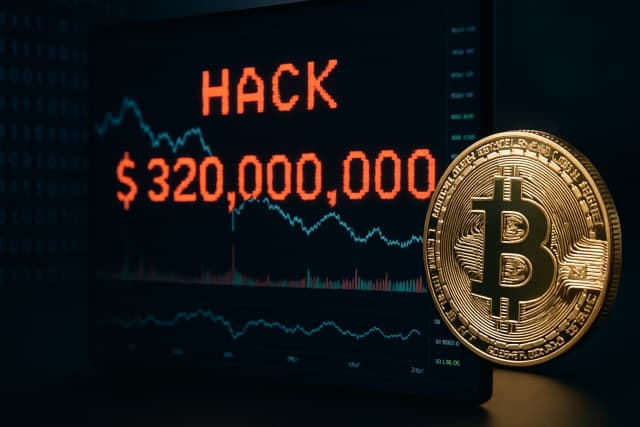






Aave, one of the largest decentralized finance protocols, has launched a $300 million DeFi United fund to address losses from the recent Kelp DAO exploit that initially hit users for $290 million. The unprecedented industry response represents the largest coordinated DeFi recovery effort to date, with Aave leading migration efforts to Solana as part of the broader rescue initiative. Tron founder Justin Sun is contributing 20 million USDT to Aave's core V3 market, while additional support totaling $240-300 million is being mobilized across the DeFi ecosystem.
The massive relief effort signals a new era of institutional cooperation in DeFi, where major protocols are willing to pool resources to maintain user confidence following security breaches. The coordinated response comes as the DeFi sector faces increased scrutiny over security practices, with the industry collectively recognizing that individual exploits threaten the entire ecosystem's credibility and growth prospects.
Unprecedented Industry Response
The DeFi United fund represents the largest coordinated response to a protocol exploit in the sector's history, dwarfing previous individual recovery efforts. Aave's decision to spearhead the initiative demonstrates the protocol's commitment to ecosystem stability, leveraging its position as a leading lending platform to rally industry support. The fund's $300 million target exceeds the initial $290 million reported losses from the Kelp DAO exploit, ensuring full user compensation plus additional reserves for future incidents.
Justin Sun's Tron organization has emerged as a key contributor, supplying 20 million USDT directly to Aave's core V3 market infrastructure. This contribution represents part of the broader $240-300 million in DeFi support being mobilized across multiple protocols and organizations. The coordinated effort spans major DeFi players who recognize that individual protocol failures threaten the entire sector's reputation and user adoption.
Strategic Migration to Solana
Aave's migration to Solana as part of the rescue efforts marks a significant strategic shift for the Ethereum-based protocol. The move leverages Solana's treasury backing for DeFi growth initiatives and takes advantage of the network's lower transaction costs and higher throughput for recovery operations. Solana's recent integration with Western Union for cross-border payments provides additional infrastructure that could benefit affected users seeking to recover and redeploy their funds.
The migration demonstrates how major DeFi protocols are becoming more chain-agnostic in response to security incidents and operational challenges. Solana's quantum-resistant developments, including developer backing for the Falcon signature scheme, provide additional security assurances that likely influenced Aave's decision. This multi-chain approach allows for more resilient recovery mechanisms and reduces single points of failure that contributed to the original Kelp DAO exploit.
Broader Security Landscape
The Kelp DAO incident occurs amid a challenging security environment for DeFi protocols, with recent weeks seeing additional vulnerabilities across the ecosystem. ZetaChain's decision to pause its mainnet following a team wallet hack demonstrates the ongoing security challenges facing even well-established protocols. The discovery of malware in open-source Solidity packages targeting developers' crypto assets highlights how security threats are evolving beyond protocol-level exploits to target the development infrastructure itself.
These incidents have prompted broader industry discussions about security standards and recovery mechanisms. The $300 million relief fund represents not just a response to the Kelp DAO exploit, but a proactive approach to building industry resilience against future attacks. The coordination between major protocols like Aave, Tron, and Solana ecosystem participants suggests that the DeFi industry is maturing beyond individual competition toward collective security measures.
Market Impact and Recovery Prospects
Despite the significant exploit and recovery efforts, major cryptocurrency markets have shown resilience, with Bitcoin trading above $76,000 and maintaining a $1.54 trillion market cap. The DeFi sector's quick response through the relief fund has helped maintain investor confidence, preventing the type of broader market selloff that might have accompanied such a large exploit in previous years. Institutional players like BitMine continue showing confidence in the space, with the company's recent acquisition of 101,901 ETH bringing its treasury to $13.3 billion.
The relief fund's success will likely influence how the DeFi industry handles future security incidents, potentially establishing a template for coordinated responses. Markets are also bracing for additional volatility from upcoming central bank meetings, including Chair Powell's final FOMC meeting, which could impact recovery efforts. The $19 billion in recent liquidations and bearish Bitcoin indicators suggest that the DeFi recovery efforts are occurring against a backdrop of broader market uncertainty, making the coordinated response even more critical for maintaining sector stability.
Ether represents a wartime store of value that continues outperforming the S&P 500 even amid market volatility.
Regulatory Implications
The massive relief effort comes as DeFi protocols navigate an evolving regulatory landscape, with recent advocacy group letters urging the SEC's Crypto Task Force to provide clearer guidelines for protocols and governance tokens. Over 20 crypto firms have warned that current informal SEC guidance lacks permanence and could lead future regulators to expand broker definitions to include software developers. The coordinated recovery response demonstrates the industry's ability to self-regulate and protect users, which could influence regulatory approaches.
New SEC rules defining Covered User Interfaces took effect on April 13, 2026, creating clearer compliance frameworks that may benefit recovery efforts like the DeFi United fund. The industry's proactive response to the Kelp DAO exploit showcases the sector's maturation and commitment to user protection, potentially supporting arguments for more favorable regulatory treatment. As the relief fund operates across multiple jurisdictions and blockchains, its success could serve as a model for how DeFi protocols can maintain regulatory compliance while providing innovative financial services and user protections.
Sources
- https://www.youtube.com/watch?v=fJui5tA7xvo
- https://cryptoslate.com
- https://blockchaintechnology-news.com
- https://www.blockchain.com/explorer/news
- https://www.youtube.com/watch?v=V4rVpIU7PSc
- https://intellectia.ai/news/crypto/secs-new-rules-reshape-crypto-trading-regulations
- https://www.mexc.com/news/1051840
- https://phemex.com/news/article/crypto-firms-urge-sec-to-formalize-defi-interface-guidelines-75800
- https://www.lw.com/en/us-crypto-policy-tracker/regulatory-developments
- https://coinlaunch.space
- https://coinmarketcap.com/new/
- https://www.kraken.com/categories/defi
Leave a Comment