






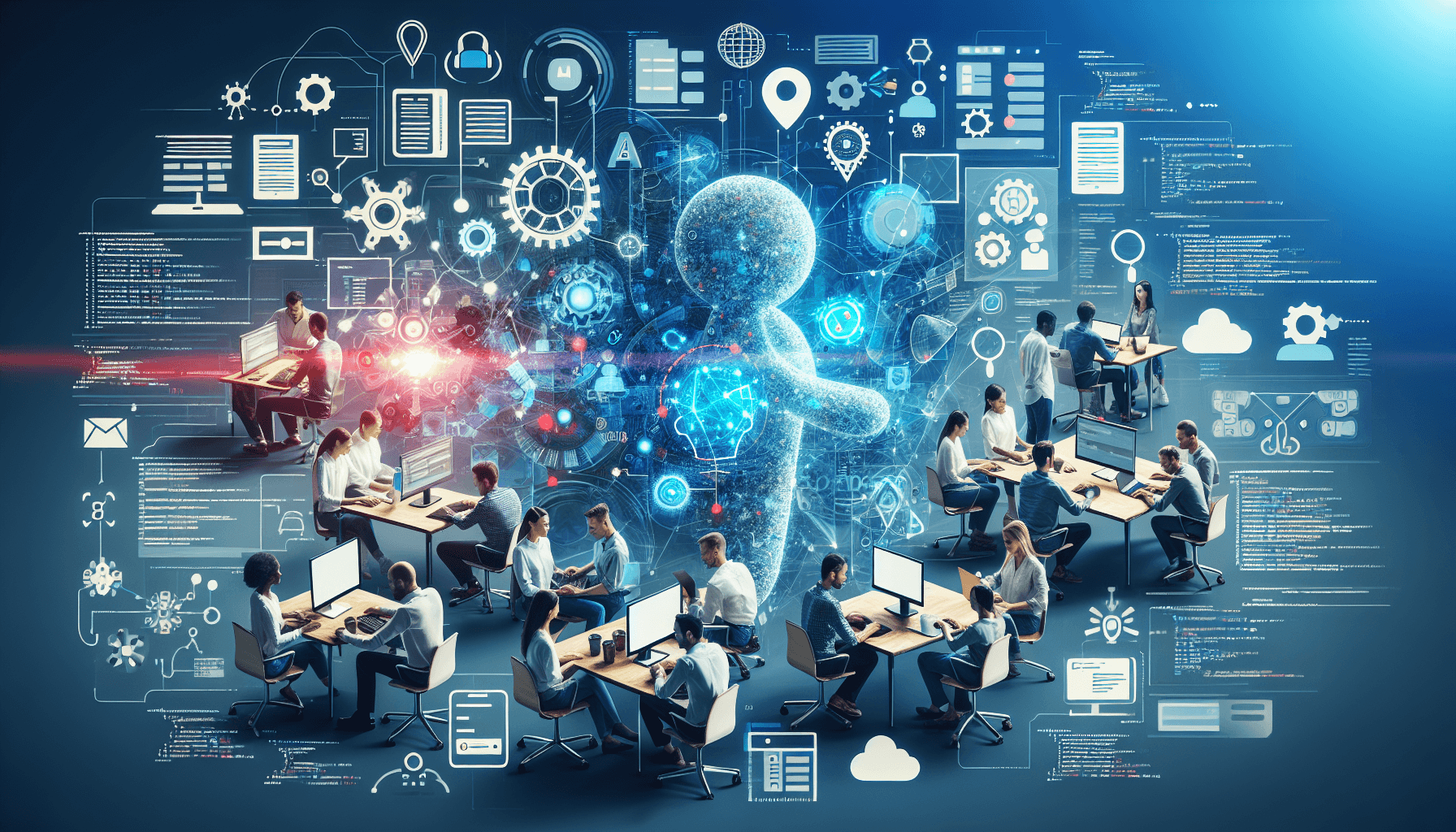




A fundamental shift is underway in software development as AI tools transition from experimental novelties to core infrastructure, with new survey data from Sonar revealing that developers now use AI coding assistance daily. The industry is simultaneously witnessing a strategic pivot among major tech companies, moving beyond simple code generation toward comprehensive AI agent orchestration platforms that promise to reshape entire development workflows.
***
This transformation represents more than just faster coding—it signals a complete reimagining of how software gets built, tested, and deployed. Major players like Salesforce, Microsoft, and emerging platforms are racing to build the infrastructure for what they're calling 'agent-first workflows,' while grappling with new security challenges and questions about the evolving role of human developers in an increasingly automated landscape.
Daily AI Usage Becomes the New Normal
Survey data from Sonar paints a picture of an industry that has rapidly embraced AI assistance, with developers reporting daily use of AI coding tools and substantial portions of their codebase now generated by artificial intelligence. The data shows executives are increasingly tracking the impact of these tools through DORA metrics, indicating that AI adoption has moved from experimentation to strategic measurement and optimization.
This widespread adoption is happening faster than many predicted, fundamentally changing how development teams operate. The shift from occasional AI assistance to daily dependence represents a tipping point that's forcing organizations to rethink their development processes, security protocols, and quality assurance measures to accommodate the new reality of AI-augmented programming.
Major Platforms Launch AI Orchestration Infrastructure
The industry response to this transformation has been swift and comprehensive. Swa Technology released a multi-model AI orchestration platform that integrates both open-source and commercial models, specifically designed to reduce shadow AI usage while supporting engineers' existing workflows. Meanwhile, Salesforce launched Headless 360, a headless API-driven layer that packages AI and developer tools specifically for agent-first workflows.
These platforms represent a strategic shift from building better code completion tools to creating comprehensive ecosystems where AI agents can operate autonomously. Opsera has unveiled AppSec AI Agents designed to transition the traditional Software Development Life Cycle (SDLC) to what they're calling AI-SDLC, while companies like Sauce Labs are releasing AI-powered automated test authoring tools that promise to eliminate manual testing bottlenecks.
Security and Compliance Challenges Emerge
The rapid adoption of AI coding tools has created new security vulnerabilities and compliance gaps that the industry is scrambling to address. Microsoft's integration of Anthropic's Mythos model specifically targets secure software development, signaling that AI's role in addressing real security tasks is becoming critical infrastructure rather than an optional enhancement. Apiiro has launched AI Threat Modeling specifically for AI coding agents, acknowledging that the tools meant to improve development are themselves creating new attack surfaces.
Testing and quality assurance are also evolving rapidly to keep pace. Parasoft introduced certified C/C++ testing with GoogleTest to bridge what they identify as gaps between AI capabilities and compliance requirements. Testlio has expanded crowdsourced testing specifically for AI applications with human-in-the-loop verification, while BrowserStack debuted a Chrome extension bundling over 10 manual web testing tools to help developers validate AI-generated code more effectively.
The Limits of AI-Led Development
Despite the enthusiasm around AI coding tools, recent moves by major companies suggest there are still significant limitations to purely AI-driven development. OpenAI's acquisition of Astral, a non-AI coding startup, underscores the recognition that improving AI programming capabilities requires traditional software engineering expertise and infrastructure. This acquisition signals that even the leaders in AI development see the need to supplement their AI capabilities with proven non-AI solutions.
The industry is also grappling with fundamental questions about the role of human developers in an increasingly automated landscape. Ongoing discussions question whether large language models will replace developers or augment them, with most experts emphasizing the continued need for human oversight even as automation expectations continue to rise. Companies like Allstacks have introduced agents specifically designed to address specification gaps in AI-assisted development, acknowledging that the human element of defining requirements and architectural decisions remains irreplaceable.
We're seeing AI transition from a nice-to-have tool to core infrastructure that enables faster shipping, but this velocity is introducing pipeline cracks and security challenges that the industry is still learning to address.
Looking Ahead: Agent Ecosystems Over Code Generation
The trend data suggests that 2025 and beyond will be defined not by better code completion, but by sophisticated agent ecosystems that can handle entire workflows autonomously. Nvidia has formed an open AI coalition with new developer tooling, while enterprise-scale implementations are increasingly focusing on spec-driven development and comprehensive AI agent benchmarks. The emphasis is shifting from making individual developers more productive to orchestrating multiple AI agents that can handle different aspects of the development lifecycle.
This transformation reflects a broader maturation of AI in software development, moving from tools that help humans code faster to systems that can manage complex development processes with minimal human intervention. However, the industry's experience with these rapid changes has also highlighted the importance of maintaining human expertise and oversight, suggesting that the future will be defined by sophisticated human-AI collaboration rather than simple replacement.
Leave a Comment