








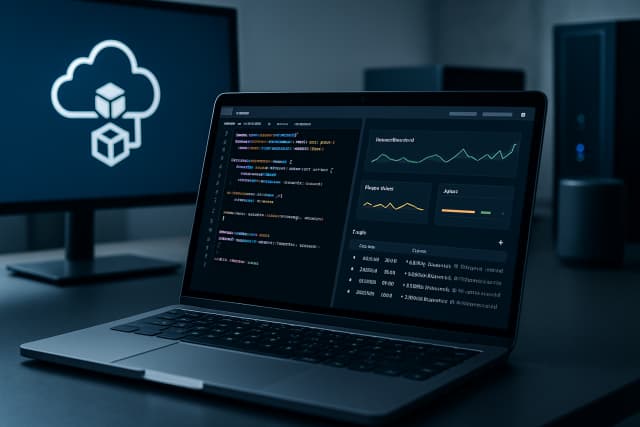





Cursor, an AI-native integrated development environment built as a fork of Visual Studio Code, has emerged as the fastest-growing coding platform in 2026, according to new industry adoption data. The IDE enables developers to perform multi-file edits, intelligent refactoring, and conversational coding with full codebase context, representing a shift toward AI-first development workflows. Meanwhile, GitHub Copilot continues to dominate overall adoption with integration across VS Code, JetBrains, and Neovim, claiming to help developers code 55% faster through AI-powered pair programming.
***
The rapid adoption of AI-native development tools marks a fundamental transformation in how software is built, with traditional text editors and IDEs being reimagined around large language model capabilities. This shift comes as ChatGPT reaches 700 million monthly users and specialized coding assistants like Claude Code and Gemini Code Assist compete for developer mindshare, driving what industry analysts describe as the most significant productivity revolution in programming since the introduction of syntax highlighting and auto-completion.
The Rise of AI-Native Development Environments
Cursor's explosive growth represents more than just another code editor entering the market—it signals the emergence of development environments built from the ground up around artificial intelligence capabilities. Unlike traditional IDEs that bolt on AI features as afterthoughts, Cursor leverages full codebase context to enable conversational programming where developers can describe desired changes in natural language and watch the AI implement them across multiple files simultaneously.
The platform's success has coincided with broader industry adoption of AI coding assistants, with GitHub Copilot leading the charge through deep integration with existing developer workflows. Copilot's ability to suggest complete functions, generate comprehensive tests, and explain complex code has made it the most widely adopted AI pair programmer, appearing natively in popular environments like VS Code, JetBrains IDEs, and Neovim.
This AI-first approach extends beyond simple code completion to encompass intelligent refactoring, automated debugging, and contextual documentation generation. Developers report that these capabilities fundamentally change their relationship with code, shifting from primarily writing to increasingly orchestrating and reviewing AI-generated solutions.
LLM Competition Drives Innovation in Code Generation
The coding assistant landscape has become a battleground for major language model providers, with ChatGPT, Claude, and Gemini each offering distinct advantages for different programming tasks. ChatGPT's Codex powers much of the current generation of coding tools and benefits from massive scale with 700 million monthly users, while Claude has introduced terminal-based 'Claude Code' functionality and Chrome extensions for seamless integration into existing workflows.
Google's Gemini Code Assist has positioned itself strongly within the Google ecosystem, featuring the new agent-first Antigravity IDE and boasting impressive benchmark performance with massive context windows that can process entire codebases. This competition has driven rapid innovation in code understanding, with each platform racing to offer more sophisticated debugging, optimization, and architectural guidance.
Emerging players like Tabnine, Codeium, and Sourcegraph Cody are carving out niches through specialized capabilities, while Replit Agent represents the next frontier by enabling end-to-end project building from natural language descriptions. Amazon's Q Developer rounds out the enterprise-focused options, highlighting how AI coding assistance has become table stakes for major cloud platforms.
Modern Development Stack Evolution
The AI coding revolution has coincided with significant shifts in the broader development stack, particularly in JavaScript runtime environments where Bun is gaining traction as a high-performance alternative for web development. This new runtime's adoption reflects developers' increasing focus on performance and developer experience, enabled partly by AI tools that reduce the complexity of working with newer technologies.
Backend platforms like Supabase have emerged as the default choice for AI-generated applications, with its PostgreSQL-based architecture providing built-in authentication and database management that pairs well with AI-assisted development workflows. Similarly, Vercel has become the go-to deployment platform for Next.js and frontend teams, offering seamless integration with the modern development pipeline that AI tools help orchestrate.
These platform choices reflect a broader trend toward cloud-first, API-driven architectures that AI coding assistants can more easily understand and manipulate. The combination of intelligent code generation with modern, well-documented platforms creates a multiplier effect that significantly accelerates development cycles.
Enterprise Adoption and Productivity Metrics
Enterprise adoption of AI coding tools has reached unprecedented levels, with G2's 2026 rankings showing development platforms increasingly integrating AI capabilities across the software development lifecycle. Traditional leaders like Jira maintain their positions in agile project management while platforms like DX and Salesforce's Agentforce 360 represent the new generation of AI-enhanced development experiences.
The productivity claims from AI coding assistants are being validated by real-world usage data, with GitHub Copilot's reported 55% improvement in coding speed becoming a benchmark for the industry. These gains extend beyond pure code generation to encompass reduced debugging time, faster onboarding of new team members, and improved code quality through AI-suggested best practices and security patterns.
Organizations are particularly drawn to the integration capabilities of these tools, with successful implementations often involving multiple AI assistants working together across different stages of the development process. The shift toward 'agentic automation' allows AI tools to handle routine tasks like testing, documentation, and basic security scanning, freeing developers to focus on architecture and business logic.
We're seeing a fundamental shift to AI-native workflows, cloud-first environments, and agentic automation, boosting productivity across SDLC stages like QA, security, and DevOps.
The Path Forward for AI-Assisted Development
The rapid evolution of AI coding tools shows no signs of slowing, with Chinese models like DeepSeek joining the competition alongside established players, while self-hosted options gain traction among security-conscious enterprises. The diversity of approaches—from Cursor's AI-native IDE to GitHub Copilot's integration strategy—suggests the market is still discovering optimal patterns for human-AI collaboration in software development.
Recent open source releases, including Git 2.54 and GitLab's Duo Agent platform reaching general availability, indicate that AI integration is becoming a standard expectation rather than a premium feature. These developments point toward a future where version control, continuous integration, and deployment pipelines all incorporate intelligent assistance as core functionality.
As the technology matures, the focus is shifting from raw capability demonstrations to practical integration with existing workflows and enterprise requirements. The winners in this space will likely be those that can seamlessly blend AI assistance with developer preferences, team practices, and organizational security requirements, while maintaining the performance and reliability that professional software development demands.
Sources
- https://10pearls.com/blog/top-software-development-technologies/
- https://www.cloudzero.com/blog/software-development-tools/
- https://www.youtube.com/watch?v=dqBpHTGZU1Q
- https://monday.com/blog/rnd/software-development-management-tools/
- https://www.muchskills.com/blog/top-software-technical-tools-muchskills
- https://jellyfish.co/blog/best-developer-experience-tools/
- https://www.g2.com/best-software-companies/top-development
- https://developers.google.com/products
- https://www.infoq.com/opensourcereleases/
- https://devops.com/category/press-releases/
- https://github.com/leogopal/free-dev-resources
- https://github.blog/open-source/
Leave a Comment