

















For nearly a decade, generative adversarial networks defined the state of the art in image synthesis. They gave us deepfakes, style transfer, and the first convincing AI-generated faces. But in 2026, GANs are increasingly a legacy technology—replaced by diffusion transformers that are more stable, more controllable, and dramatically more capable.
The transition has been swift and decisive. Two years ago, diffusion models were primarily used for image generation. Today, diffusion transformer architectures—often called DiTs—are the backbone of the most advanced systems for video, 3D, audio, and even molecular design. The GAN era is not quite over, but its successor is already here.
Why GANs Lost
GANs work by pitting two neural networks against each other: a generator that creates fake data and a discriminator that tries to detect it. This adversarial dynamic produces impressive results but is notoriously unstable. Training a GAN requires careful hyperparameter tuning, and mode collapse—where the generator learns to produce only a narrow range of outputs—remains a persistent problem.
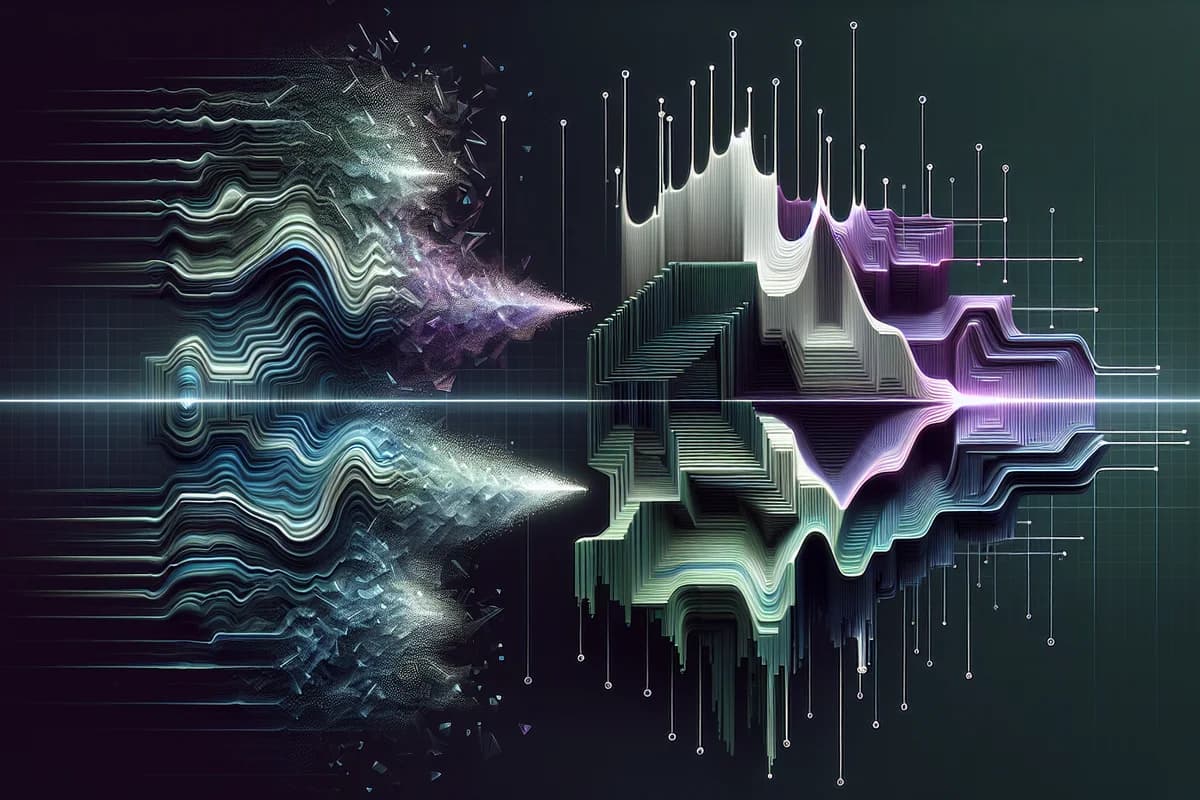
Diffusion models take a fundamentally different approach. They learn to reverse a gradual noising process, starting from pure noise and progressively refining it into a coherent output. This process is mathematically well-understood, stable to train, and naturally produces diverse outputs. When combined with the transformer architecture—which excels at capturing long-range dependencies—the result is a generative system that is both more powerful and more predictable than any GAN.
The DiT Architecture
The diffusion transformer, or DiT, replaces the U-Net backbone traditionally used in diffusion models with a transformer. This seemingly simple swap has profound implications. Transformers scale more predictably with compute, handle variable-length inputs naturally, and can attend to global context in ways that convolutional architectures cannot.
The latest DiT models can generate photorealistic images at resolutions up to 4K, produce coherent video clips lasting several minutes, and create 3D objects that can be immediately used in game engines and CAD software. The quality gap between AI-generated and human-created content has, for many applications, effectively closed.
Applications Beyond Images
The most exciting developments are happening outside the image domain, where diffusion transformers are proving to be a general-purpose generative architecture.
1. Video Generation
Video generation has improved dramatically. Current systems can produce coherent, high-resolution video from text descriptions, maintaining consistent characters, physics, and lighting across hundreds of frames. The applications in film, advertising, and education are already being explored commercially.
2. 3D and Spatial Computing
Diffusion transformers are also transforming 3D content creation. New models can generate textured 3D meshes from text or image prompts, dramatically reducing the time required for game asset creation, architectural visualization, and product design. As spatial computing platforms like Apple Vision Pro and Meta Quest mature, the demand for 3D content is growing exponentially—and AI generation is the only way to meet it.
GANs were brilliant but fragile. Diffusion models are the engineering-grade solution the field needed to move from research demos to production systems.
3. Scientific Applications
Perhaps the most impactful applications are in science. Diffusion models are being used to design novel protein structures, predict molecular interactions, and generate candidate drug compounds. The same architecture that creates photorealistic images is accelerating drug discovery and materials science.
What Remains
GANs have not disappeared entirely. They remain useful for specific applications where speed is critical—real-time face animation, for instance—because they can generate outputs in a single forward pass, while diffusion models require multiple denoising steps. But the performance gap is narrowing as distillation techniques allow diffusion models to generate high-quality outputs in fewer steps.
The shift from GANs to diffusion transformers is not just a technical transition—it represents a maturation of the generative AI field. The era of fragile, temperamental generative models is giving way to one of reliable, scalable, and controllable systems that can be deployed in production at scale.
Leave a Comment