








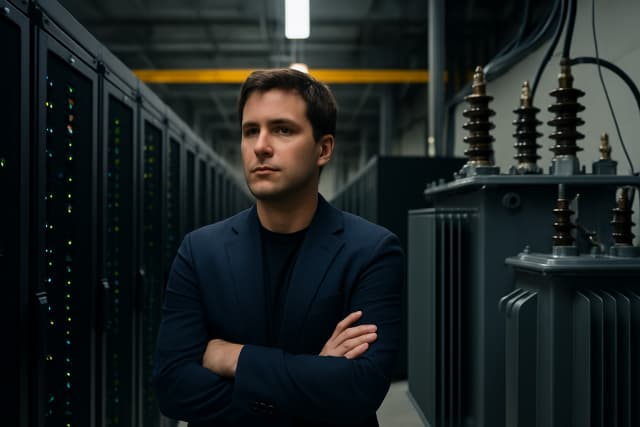



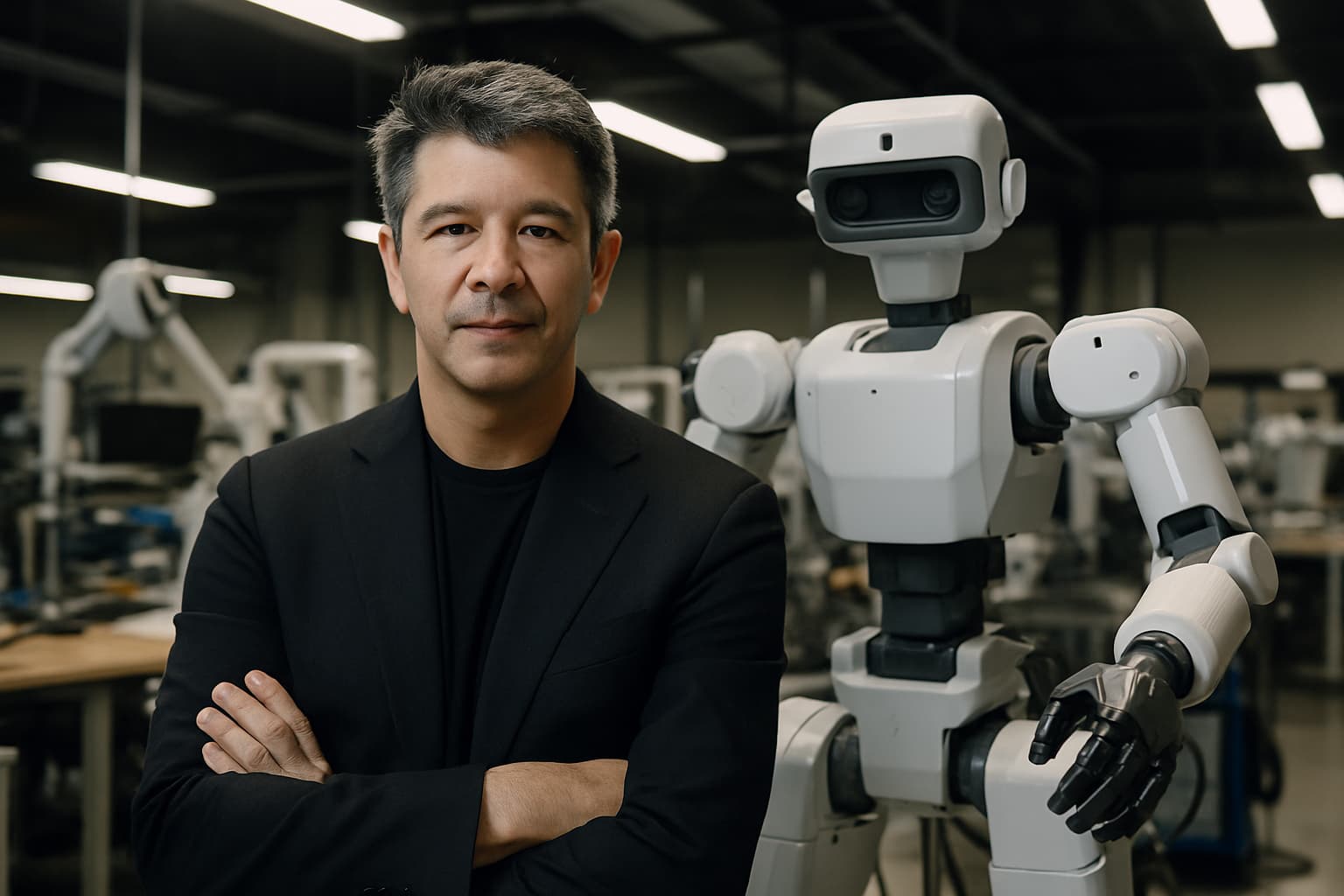



Atoms, a physical AI startup founded by Uber co-founder Travis Kalanick, has raised $1.7 billion in a funding round led by Andreessen Horowitz, according to Crunchbase data released this week. The round ranks among the largest venture financings of 2026 and signals that investors are willing to write mega-checks for founders betting on machines that can perceive and act in the physical world. It arrives during an extraordinarily active week for startup funding, with Joulent raising $1.75 billion for AI-focused energy infrastructure and Whatnot closing $545 million at a $20 billion valuation. But the scale of Atoms's raise, paired with Kalanick's track record of disrupting entrenched industries, has made it the standout story of the week.
***
The bet on Atoms comes at a moment when venture capital is flooding into physical AI, the umbrella term for systems that combine machine learning with robotics, sensors, and real-world actuation rather than software alone. Nearly half of Y Combinator's Spring 2025 batch consisted of AI agent companies, according to PitchBook, and investors are increasingly chasing the next layer up the stack, hardware and embodied intelligence that can operate factories, warehouses, and infrastructure. Kalanick, who built Uber into a global logistics and transportation giant before departing the company in 2017, is now positioning himself at the center of that shift, and Andreessen Horowitz's willingness to lead a round of this size suggests the firm sees Atoms as a category-defining bet rather than a speculative moonshot.
A Mega-Round in a Record Week
The $1.7 billion raised by Atoms did not happen in isolation. It landed in the middle of one of the busiest funding weeks Crunchbase has tracked this year, with Joulent securing $1.75 billion backed by National Grid Ventures for energy infrastructure serving AI and compute-intensive industries, and Neura Robotics closing $1.4 billion in Europe. Valar Atomics, a nuclear-adjacent energy startup, closed a $1 billion Series B led by Sequoia Capital, while Together AI brought in $800 million and Neko Health raised $700 million.
Taken together, these rounds point to a venture market that has bifurcated into two dominant themes: the AI software and model layer, and the physical infrastructure, energy, and robotics required to support it. Atoms sits squarely at the intersection of both, which helps explain why it commanded one of the largest checks of the week despite offering few public details about its product roadmap. Crunchbase's description of Atoms as a physical AI company, rather than a robotics or hardware company specifically, suggests the startup may be building foundational technology intended to generalize across multiple embodied applications.
Kalanick's Second Act
Travis Kalanick has not shied away from ambitious, capital-intensive ventures since leaving Uber. He later founded CloudKitchens, a ghost-kitchen real estate company that raised billions from Saudi Arabia's Public Investment Fund, demonstrating both an appetite for infrastructure-heavy business models and an ability to attract sovereign-scale capital. Atoms appears to continue that pattern, translating Kalanick's experience coordinating massive logistics networks into a new venture focused on physical AI systems.
Investors backing Kalanick again is notable given the scrutiny his leadership style faced during his Uber tenure, including his ousting by the company's board in 2017 amid a string of scandals. That Andreessen Horowitz, one of Silicon Valley's most influential venture firms, is willing to lead a $1.7 billion round suggests the firm is prioritizing Kalanick's operational track record and vision over past controversy. It also reflects a broader Silicon Valley pattern in which founders who have already built billion-dollar companies are given outsized benefit of the doubt when raising for new, unproven ventures.
Why Physical AI Is Attracting Billions
Physical AI has emerged as one of the hottest subsectors in venture capital because it promises to extend the gains of large language models and machine learning into the physical economy, manufacturing, logistics, construction, and energy. Unlike pure software AI, physical AI requires enormous upfront capital for hardware, sensors, and real-world testing, which explains why rounds in this category tend to be measured in the hundreds of millions or billions rather than tens of millions. Neura Robotics's $1.4 billion raise this same week reinforces that investors view robotics and embodied AI as capital-intensive but potentially category-defining markets worth funding at scale.
The parallel surge in energy infrastructure funding, exemplified by Joulent's $1.75 billion raise and Valar Atomics's $1 billion Series B, is not coincidental. Physical AI systems, along with the data centers and compute clusters that train them, require massive amounts of reliable power, and investors are increasingly funding the energy backbone alongside the AI applications themselves. This creates a feedback loop in which capital flows simultaneously into AI models, the robots and physical systems that act on their outputs, and the power infrastructure that keeps it all running.
Physical AI is the next trillion-dollar platform shift, and the founders who understand both software and operations at scale are the ones who will win it.
A Crowded Field of Nine and Ten-Figure Deals
The Atoms round is remarkable not just for its size but for how it stacks up against an unusually dense cluster of other nine and ten-figure deals disclosed the same week. Ramp closed a $750 million round, Airwallex raised $320 million at an $11 billion valuation, and Iceye brought in $520 million in Europe, underscoring that capital is flowing broadly across fintech, satellite imaging, and AI infrastructure simultaneously. Sila secured $300 million led by Atreides Management and Sutter Hill Ventures, while Cyera raised $200 million and XBow closed a $120 million Series C.
On the acquisitions side, the week also saw Qualcomm pay $4 billion for an AI startup founded by the engineer behind Swift and LLVM, while Stripe is reportedly close to acquiring AI gateway startup OpenRouter for more than $7 billion, and OpenAI acquired presentation startup NextSlide. The combination of mega-funding rounds and billion-dollar acquisitions in a single week illustrates how aggressively both venture investors and strategic acquirers are moving to stake claims across the AI value chain, from infrastructure and energy to applications and developer tooling, before the market consolidates further.
Sources
- https://vcnewsdaily.com/
- https://news.crunchbase.com/venture/biggest-funding-rounds-physical-ai-fintech-defense-atoms/
- https://techfundingnews.com/
- https://news.crunchbase.com/
- https://news.crunchbase.com/venture/biggest-funding-rounds-june-5-2026/
- https://news.crunchbase.com/venture/biggest-funding-rounds-cybersecurity-defense-startup-ai-odyssey-leads/
- https://news.crunchbase.com/venture/biggest-funding-rounds-security-ai-cloaked-frore/
- https://www.techbible.ai/learn/tech-startup-funding-rounds
- https://www.fundedstartupsdaily.com/
- https://news.crunchbase.com/venture/biggest-funding-rounds-ai-energy-biotech-joulent/
- https://fundedjobs.co/news
- https://news.crunchbase.com/venture/biggest-funding-rounds-ai-biotech-healthcare-ninjaone-leads/
Leave a Comment