







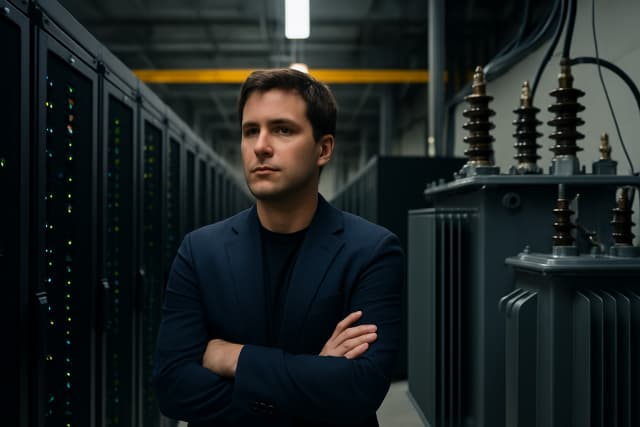





Nscale, a European AI infrastructure startup, closed a $2 billion Series C this week, becoming the second-largest funding round in a seven-day stretch that also saw Travis Kalanick's Atoms raise $1.7 billion and Advanced Machine Intelligence pull in $1.03 billion. The round underscores how quickly capital is flooding into the physical and computational backbone of the AI boom, not just the model layer that has dominated headlines for the past three years. Nscale's raise, along with a cluster of nine-and ten-figure rounds across defense, robotics, and fintech, marks one of the densest weeks for late-stage venture activity in 2026 so far.
The scale of this week's fundraising activity, four separate rounds above $600 million alone, reflects a maturing but increasingly capital-intensive AI economy. Where 2023 and 2024 were defined by breakneck model releases and API wars, 2026's venture landscape is being shaped by the unglamorous but essential business of building data centers, power capacity, and compute supply chains fast enough to keep pace with demand. Investors are no longer just betting on which lab will ship the smartest model; they are betting on who controls the physical infrastructure and real-world systems that AI increasingly depends on.
A $2 Billion Bet on Compute Scarcity
Nscale's $2 billion Series C is the largest single funding event of the week and one of the biggest infrastructure-focused rounds of the year, aimed squarely at expanding the company's AI data center and GPU cloud capacity. The company has positioned itself as an alternative to hyperscalers for AI labs and enterprises that need dedicated, high-density compute without waiting in line behind Amazon, Microsoft, or Google. That pitch has proven extraordinarily attractive to investors as compute scarcity, not algorithmic breakthroughs, has become the binding constraint on AI progress.
The round arrives at a moment when nearly every major AI lab, from OpenAI to Anthropic, is signing multibillion-dollar compute deals with cloud providers and chipmakers. Nscale's strategy is to become one of the picks-and-shovels players in that arms race, building out physical infrastructure that can be leased rather than owned. Investors betting on Nscale are effectively wagering that demand for AI compute will keep outstripping supply well into the back half of the decade, a bet that has so far proven correct across nearly every corner of the industry.
Physical AI and World Models Draw Billions
Nscale's round did not happen in isolation. It landed in the same week as Atoms, Travis Kalanick's physical AI startup, raising $1.7 billion, and Advanced Machine Intelligence closing $1.03 billion to build so-called world models, AI systems designed to learn from and interact with the physical environment rather than just text and images. Together, the three rounds total more than $4.7 billion aimed at pushing AI beyond chatbots and into robotics, logistics, and embodied intelligence.
This shift mirrors a broader theme playing out across the venture landscape this year. Robotics-focused startups like Figure AI, now valued at $39 billion with $1.75 billion raised to date, and Skild AI, valued at $1.5 billion, have shown that investors are willing to pour enormous sums into companies attempting to bring AI out of the data center and into physical space. World models, in particular, are increasingly seen as the next frontier after large language models, with the promise of systems that can simulate and predict real-world physics well enough to control robots, vehicles, and industrial equipment.
Defense and Space Startups Join the Mega-Round Club
True Anomaly's $600 million Series D for autonomous defense and space systems rounded out the week's largest raises, a sign that national security-adjacent startups are now commanding the kind of capital once reserved exclusively for consumer AI companies. The round reflects growing government and private investor appetite for autonomous systems capable of operating in orbit and contested environments, a category that has moved from niche to mainstream as geopolitical tensions and satellite congestion both intensify.
True Anomaly's raise sits alongside a broader wave of defense-tech financing that has accelerated sharply since 2024, as venture firms increasingly treat defense and space infrastructure as core parts of their AI thesis rather than a separate vertical. The convergence of autonomy, AI, and hardware in these deals suggests that the same capital pools funding chatbots and coding assistants are now flowing just as readily into systems designed for military and orbital applications.
A Crowded Field of Nine-Figure Rounds
Beyond the week's headline deals, a long tail of substantial raises rounded out an unusually busy period for venture capital. Ripple raised $500 million at a $40 billion valuation, Metropolis announced $1.6 billion in combined debt and equity including a $500 million Series D, and cybersecurity firm Armis closed $435 million ahead of a planned IPO. Fintech and mobility also featured prominently, with Airwallex raising $320 million at an $11 billion valuation and autonomous trucking startup Gatik securing $200 million.
Brain-computer interface company Synchron added $200 million in Series D funding, further evidence that neurotechnology has moved from experimental science to a fundable, capital-intensive category in its own right. Taken together, these rounds illustrate a venture market that has bifurcated: a handful of frontier AI and infrastructure companies absorbing billions in a single check, and a wide band of well-established startups across fintech, mobility, security, and health tech still commanding hundreds of millions apiece.
Every AI lab in the world is chasing the same scarce resource right now, and that resource isn't talent or algorithms anymore, it's gigawatts and GPUs delivered on schedule.
What the Numbers Say About Where Capital Is Flowing
PitchBook data cited in recent industry reporting found that corporate venture capital now accounts for nearly 75% of AI VC investment, a striking concentration that helps explain why infrastructure-heavy bets like Nscale's are able to raise at such scale. Strategic investors, many of them arms of major tech companies, are increasingly willing to fund the unglamorous physical layer of AI because their own product roadmaps depend on it. That dynamic also helps explain why Y Combinator's most recent batch skewed so heavily toward AI agents, with 46% of startups falling into that category, even as the largest checks this week went to infrastructure and physical AI rather than software agents.
For founders and investors alike, the week's rounds suggest a venture market recalibrating around durability rather than novelty. Compute capacity, autonomous defense systems, and embodied AI all require years of capital-intensive buildout before they generate returns, a sharp contrast to the software-only startups that once defined venture economics. If this week is any indication, the firms willing to write billion-dollar checks are increasingly betting that the winners of the AI era will be decided as much by steel, silicon, and satellites as by the models running on top of them.
Sources
- https://vcnewsdaily.com/
- https://techfundingnews.com/
- https://news.crunchbase.com/venture/biggest-funding-rounds-ai-defense-fintech-robotics/
- https://genztech.blog/funding-tracker/
- https://www.techbible.ai/learn/tech-startup-funding
- https://news.crunchbase.com/venture/biggest-funding-rounds-physical-ai-fintech-defense-atoms/
- https://news.crunchbase.com/venture/biggest-funding-rounds-ai-robotics-ecommerce-quince/
- https://news.crunchbase.com/venture/biggest-funding-rounds-cybersecurity-defense-startup-ai-odyssey-leads/
- https://news.crunchbase.com/
- https://news.crunchbase.com/venture/biggest-funding-rounds-security-ai-cloaked-frore/
- https://www.techbible.ai/learn/tech-startup-funding-rounds
Leave a Comment