




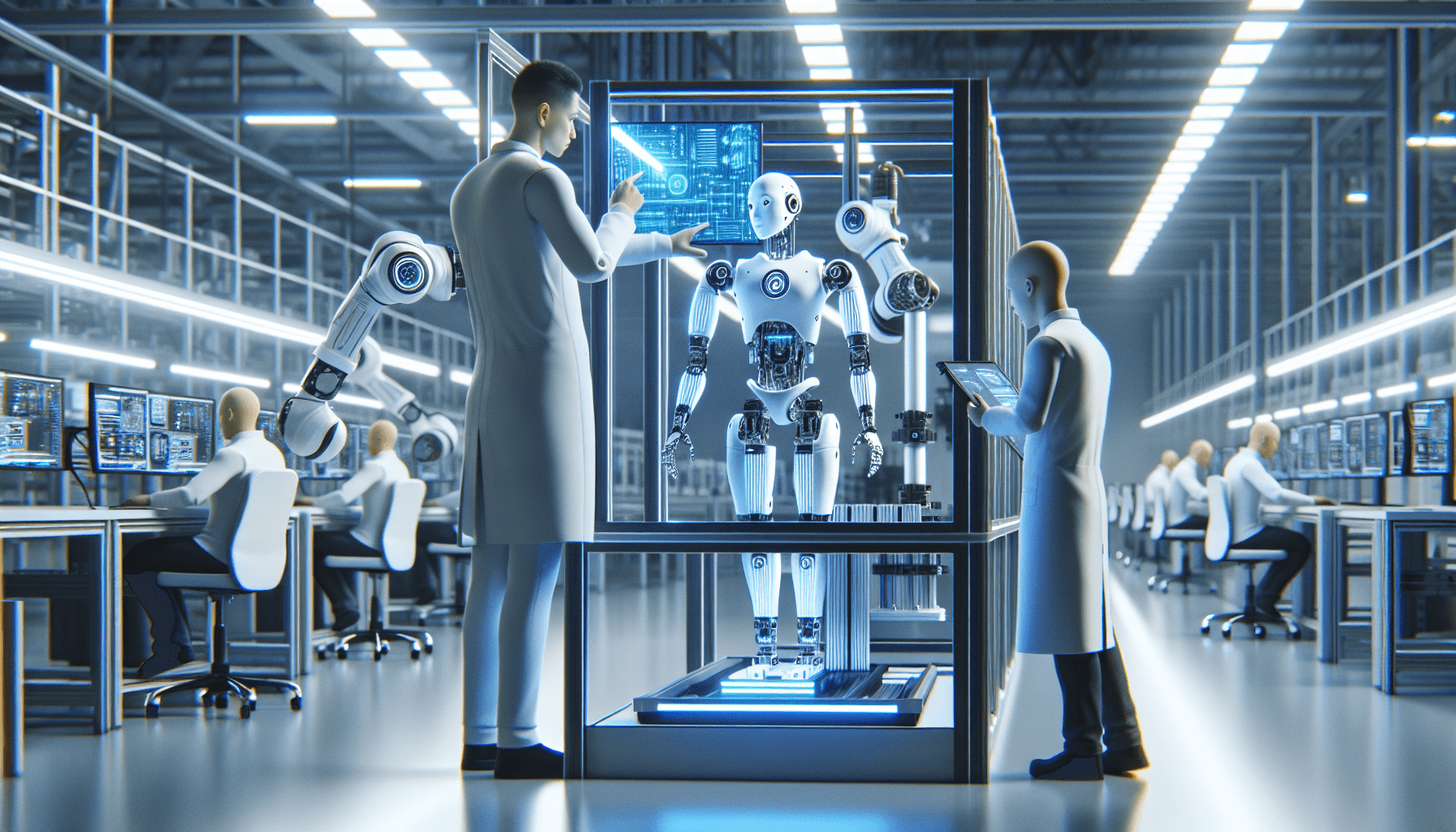

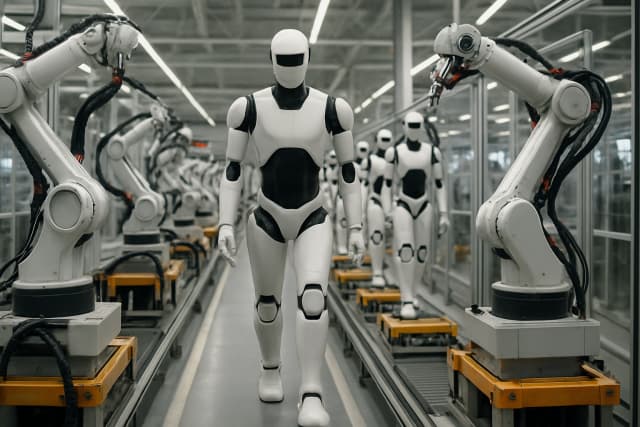
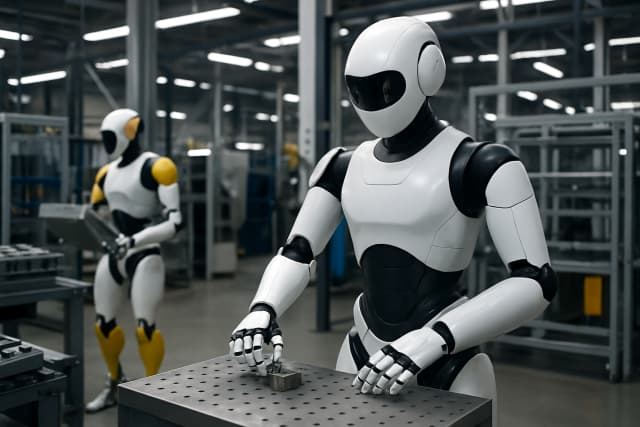
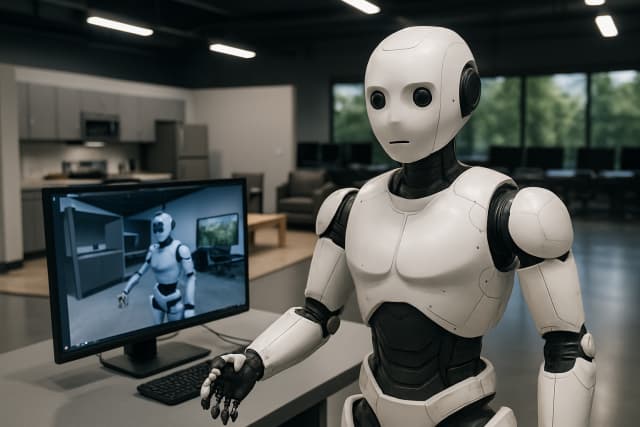
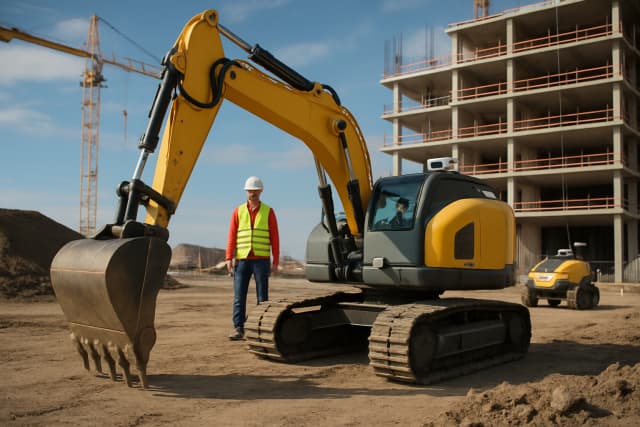










AgiBot has become the first company to deploy Real-World Reinforcement Learning systems at industrial scale, marking a pivotal moment in the evolution of autonomous robotics. The Chinese robotics firm has unveiled new embodied AI robots powered by foundation models that can learn and adapt directly in manufacturing environments, moving beyond the controlled laboratory settings that have constrained previous generations of industrial automation.
This breakthrough represents a fundamental shift from traditional pre-programmed industrial robots to AI systems that can continuously improve their performance through real-world experience. As humanoid robots enter factories worldwide for pilot deployments in material handling and assembly tasks, AgiBot's learning-capable systems could accelerate the transition from limited proof-of-concepts to production-ready automation that rivals traditional industrial robotics.
Breaking the Learning Barrier
AgiBot's Real-World Reinforcement Learning deployment represents the first successful implementation of continuous AI learning in production manufacturing environments. Unlike traditional industrial robots that operate from fixed programming, these systems can observe, experiment, and optimize their performance in real-time without human intervention. The technology enables robots to handle variations in materials, lighting conditions, and task requirements that would typically require extensive reprogramming or human oversight.
The foundation models powering AgiBot's humanoid robots process sensory data from multiple sources simultaneously, allowing them to understand context and make decisions similar to human workers. This embodied AI approach means the robots can transfer learning from one task to another, dramatically reducing the time and cost associated with deploying automation across different manufacturing processes. Early deployments show the robots achieving competency in new tasks within hours rather than the weeks or months required for traditional robotic integration.
Industrial Scale Reality Check
While AgiBot leads in learning capability, the broader humanoid robotics industry remains in early production phases with significant limitations. Current deployments across companies like Figure AI, Agility Robotics' Digit, Tesla Optimus, and Unitree focus on material handling, bin picking, simple assembly, and inspection tasks at cycle times well below traditional industrial robot performance. None of the current generation operates at automotive production line speeds, relegating them to applications where flexibility outweighs raw throughput.
Boston Dynamics' Atlas deployment at Hyundai exemplifies the current sweet spot for humanoid robots: handling heavy and hazardous objects that create safety risks and labor shortages for human workers. Similarly, Siemens and robotics company Humanoid have successfully trialed human-like robots in German electronics factories, focusing on 24/7 continuous operation during off-shifts rather than competing directly with high-speed dedicated automation during peak production hours.
Market Momentum Building
The convergence of AI learning capabilities with practical deployment experience is driving unprecedented investment in humanoid robotics. Beyond AgiBot's breakthrough, companies like RobCo launched Autonomous Alfie at Hannover Messe for industrial automation, while PIA Automation established a dedicated embodied AI and humanoid robotics division targeting industrial applications. The Siemens-NVIDIA-Humanoid partnership is integrating wheeled Alpha humanoids for physical AI in factory operations, demonstrating enterprise confidence in near-term commercial viability.
Consumer-focused developments are also accelerating, with Unitree's R1 humanoid priced at $6,000 and capable of advanced mobility including cartwheels, and Ubtech's Walker S2 demonstrating autonomous battery swapping capabilities. Weave Robotics is targeting 2025 delivery of home humanoid Isaac, indicating the technology is expanding beyond industrial applications into broader commercial markets.
Technical Hurdles Remain
Despite AgiBot's learning breakthrough and growing market momentum, fundamental technical challenges continue to limit widespread deployment. Mean time to failure rates, safety certification under ISO 10218 frameworks, and cost reduction to competitive payback periods remain significant barriers to production-scale adoption. Industry analysts expect limited production deployments in logistics and light manufacturing between 2027 and 2030, contingent on solving these core reliability and economic challenges.
Manufacturing executives are advised not to delay proven automation investments while waiting for humanoid robots to mature, but should establish evaluation criteria for data-driven adoption decisions when vendors achieve production-ready reliability milestones. The technology represents genuine long-term potential rather than a near-term drop-in replacement for existing industrial automation, requiring careful strategic planning around deployment timelines and integration requirements.
Goldman Sachs projects the humanoid robot market to reach $38 billion by 2035, with an estimated 1.4 million unit shipments driven by a 40% reduction in manufacturing costs.
The Path Forward
AgiBot's real-world learning deployment signals a critical inflection point where AI-powered robots can adapt to manufacturing variability without extensive human programming. This capability, combined with growing deployments at companies like Hyundai and Siemens, suggests the industry is moving from proof-of-concept to early production implementations. The key differentiator will be which companies can combine learning capabilities with the reliability and safety standards required for full-scale manufacturing deployment.
With IDTechEx estimating the global humanoid robot market will reach $30 billion by 2036, the race is intensifying between established robotics companies, AI-first startups like AgiBot, and technology giants investing heavily in embodied AI. The winners will likely be those who can bridge the gap between impressive learning capabilities demonstrated in controlled environments and the harsh realities of 24/7 industrial production requirements. AgiBot's real-world learning deployment represents a significant step toward that goal, but the ultimate test will be sustained performance at industrial scale over months and years of continuous operation.
Sources
- https://www.therobotreport.com
- https://roboticsandautomationnews.com
- https://thesiliconreview.com/robotics
- https://www.ecpi.edu/blog/7-latest-innovations-in-robotics
- https://www.automate.org/robotics/industry-insights
- https://news.mit.edu/topic/robotics
- https://www.sciencedaily.com/news/computers_math/robotics/
- https://www.evsint.com/humanoid-robots-industrial-manufacturing-2026/
- https://sedonatec.com/feeds/blog/robots-factory
- https://www.youtube.com/watch?v=4l1wfW4_ETM
- https://amdmachines.com/blog/the-future-of-humanoid-robots-in-manufacturing/
- https://www.youtube.com/watch?v=JMxKpo_Llt8
- https://humanoidroboticstechnology.com/articles/top-12-humanoid-robots-of-2026/
Leave a Comment