





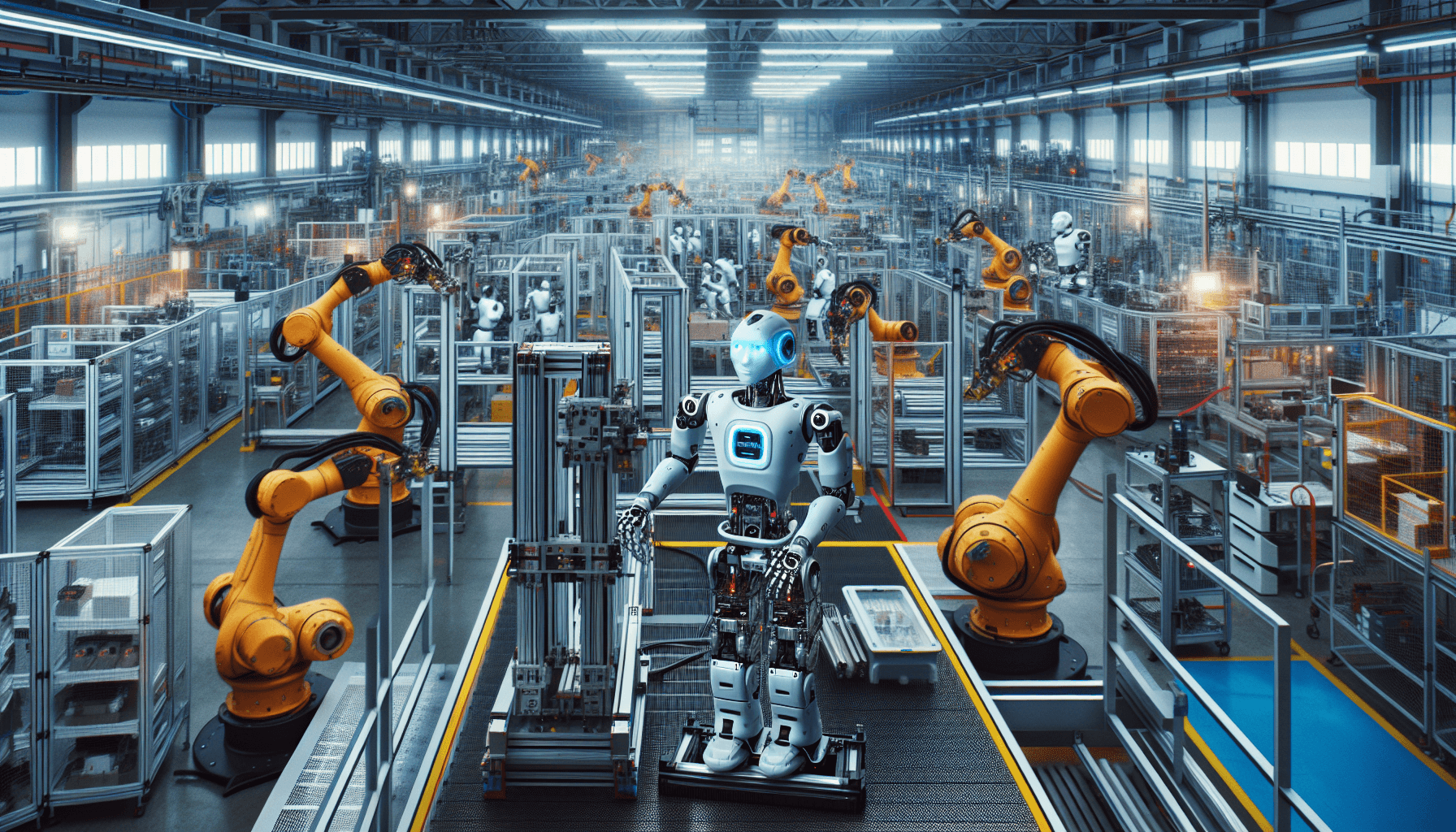
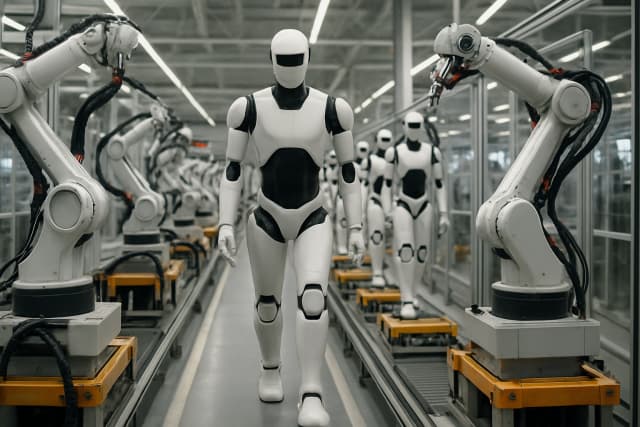
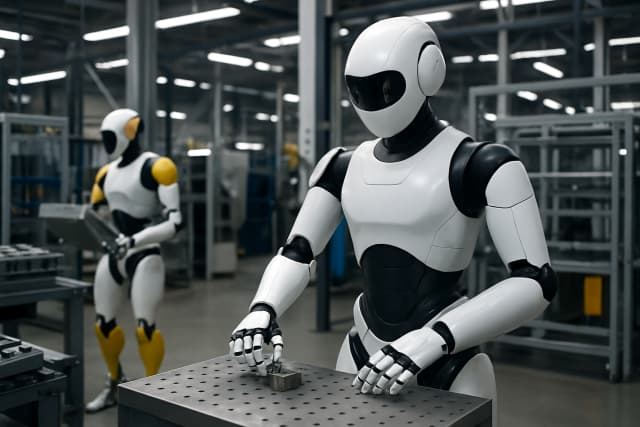
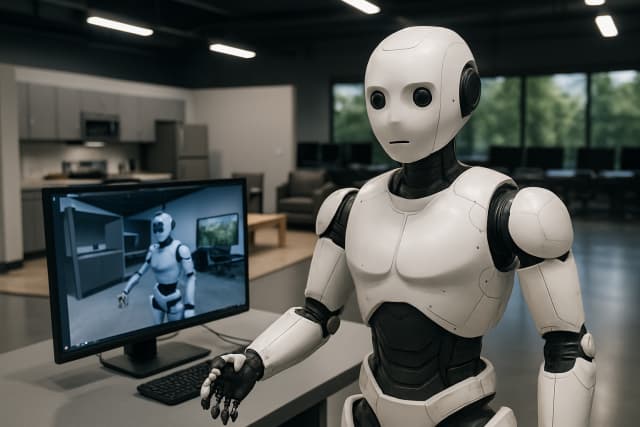
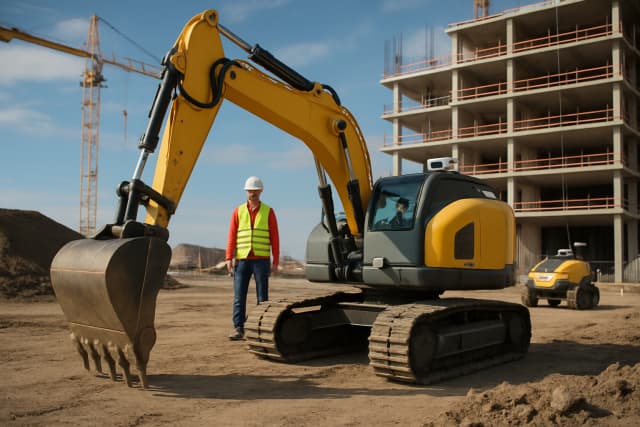



Humanoid robots are stepping off the research lab floor and into real manufacturing environments, with Tesla deploying its Optimus Gen 2 robots in its own factories and Hyundai utilizing Boston Dynamics' Atlas for heavy object handling. The transition marks a pivotal shift from pilot programs to limited production deployments, as manufacturers grapple with 433,000 unfilled U.S. manufacturing jobs as of December 2025. Companies including Schaeffler, Siemens, and Chinese electronics manufacturers are now integrating these AI-powered humanoids into their operations for tasks ranging from quality control to material handling.
The deployment represents the culmination of years of advancement in autonomous systems and physical AI, with humanoids finally proving capable of operating in dynamic factory environments without extensive infrastructure modifications. Goldman Sachs projects the humanoid robotics market will reach $38 billion by 2035, driven by the robots' ability to work 24/7 shifts and adapt to multiple tasks using the same hardware platform.
From Pilot to Production: Major Deployments Underway
Tesla's Optimus Gen 2 robots are now handling repetitive tasks within the company's own manufacturing facilities, featuring improved joint articulation and AI systems that learn from real-world operational data. The deployment represents Tesla's confidence in transitioning from prototype demonstrations to actual production support, where the robots work alongside human employees during off-shifts.
At Hyundai facilities, Boston Dynamics' Atlas robots are tackling the physically demanding task of handling heavy and awkward objects, specifically designed to reduce worker strain and injury risk. The partnership demonstrates how established robotics companies are adapting their advanced platforms for commercial manufacturing applications rather than limiting them to research and development showcases.
Schaeffler's auto parts plant in Cheraw, South Carolina, began integrating humanoids for manual tasks in April 2026, with a strategy focused on shifting human workers to different roles rather than direct replacement. This approach reflects the industry's current view of humanoids as augmentation tools that can fill labor gaps while maintaining human oversight and decision-making in complex operations.
AI-Powered Flexibility Drives Adoption
The key advantage driving these deployments is the robots' ability to perform multiple tasks using Vision-Language-Action AI systems that can learn new operations through natural language instructions and real-world observation. Unlike traditional industrial robots that require extensive reprogramming for different tasks, humanoids can switch between material handling, quality inspection, and basic assembly work within the same shift.
Chinese electronics plants have been particularly aggressive in scaling humanoid deployments, with AgiBot and Genie G2 robots operating in facilities in Nanchang for assembly operations, quality checks, and object handling. These implementations are generating rapid amounts of real-world training data that continuously improve the robots' performance and reliability.
Siemens has partnered with Humanoid to integrate AI-driven robots that can automate complex, repetitive factory tasks while operating alongside existing automation systems. The collaboration emphasizes the robots' ability to work within legacy manufacturing infrastructure without requiring costly factory retrofits or complete production line redesigns.
Addressing Critical Labor Shortages
The timing of these deployments coincides with persistent manufacturing labor shortages, with 433,000 open positions in U.S. manufacturing as of December 2025 and a monthly quit rate of 1.4 percent creating ongoing operational challenges. Humanoids offer the promise of 24/7 operation during off-shifts when human staffing is most difficult to maintain, providing consistency in production schedules.
Industry projections suggest that unfilled manufacturing jobs could reach 1.9 million by 2033, making automation not just a productivity enhancement but a necessity for maintaining production capacity. The robots' ability to handle hazardous tasks also addresses safety concerns that contribute to high turnover rates in certain manufacturing sectors.
Performance Gaps and Market Realities
Despite the promising deployments, humanoids still operate significantly slower than traditional industrial robots and have not yet demonstrated the reliability required for full automotive production line speeds. Current implementations focus on tasks where flexibility matters more than raw speed, such as material handling, inspection with handheld scanners, and limited machine tending operations like CNC loading and unloading.
The robots face ongoing challenges including unproven reliability for production-grade operations, high initial costs, and the need for safety certifications under standards like ISO 10218. Supply chain issues also continue to limit the scale at which manufacturers can deploy these systems, even when they prove effective in pilot programs.
Economic analysis suggests that while humanoids can provide value in addressing labor shortages, their payback periods currently lag behind collaborative robots until anticipated cost reductions of approximately 40 percent occur between 2027 and 2030. Goldman Sachs projects the market could reach 1.4 million units by 2035, but widespread adoption depends on continued improvements in reliability and cost-effectiveness.
These deployments focus on flexibility in existing infrastructure without major retrofits, addressing labor shortages and hazardous tasks, though they lag behind traditional robots in speed, reliability, and production-scale rates.
Looking Ahead: Limited Production by 2030
Industry analysts predict that limited production deployments in logistics and light manufacturing will expand significantly between 2027 and 2030, contingent on continued improvements in reliability, substantial cost reductions, and completion of necessary safety certifications. The current wave of deployments serves as crucial real-world testing that will inform broader commercialization strategies.
Companies like Figure AI, Agility Robotics with their Digit platform, Unitree's H1 and G1 models, and Apptronik's Apollo are all competing for market position as the technology matures. Accenture's pilot programs focus on integrating humanoids with human workers while providing operational visibility and management oversight.
Manufacturing executives are being advised to prioritize proven automation technologies for immediate needs while simultaneously preparing integration criteria and infrastructure for humanoid scaling. The experience gained from traditional industrial robot deployments provides a foundation for understanding how to effectively manage and scale humanoid robot operations as the technology reaches production readiness.
Sources
- https://www.therobotreport.com
- https://roboticsandautomationnews.com
- https://www.youtube.com/watch?v=jn4jxLdDXBw
- https://www.ecpi.edu/blog/7-latest-innovations-in-robotics
- https://www.automate.org/robotics/industry-insights
- https://news.mit.edu/topic/robotics
- https://www.sciencedaily.com/news/computers_math/robotics/
- https://www.evsint.com/humanoid-robots-industrial-manufacturing-2026/
- https://sedonatec.com/feeds/blog/robots-factory
- https://www.youtube.com/watch?v=4l1wfW4_ETM
- https://www.youtube.com/watch?v=JMxKpo_Llt8
- https://amdmachines.com/blog/the-future-of-humanoid-robots-in-manufacturing/
- https://www.youtube.com/watch?v=5GqGxamc1fE
Leave a Comment