





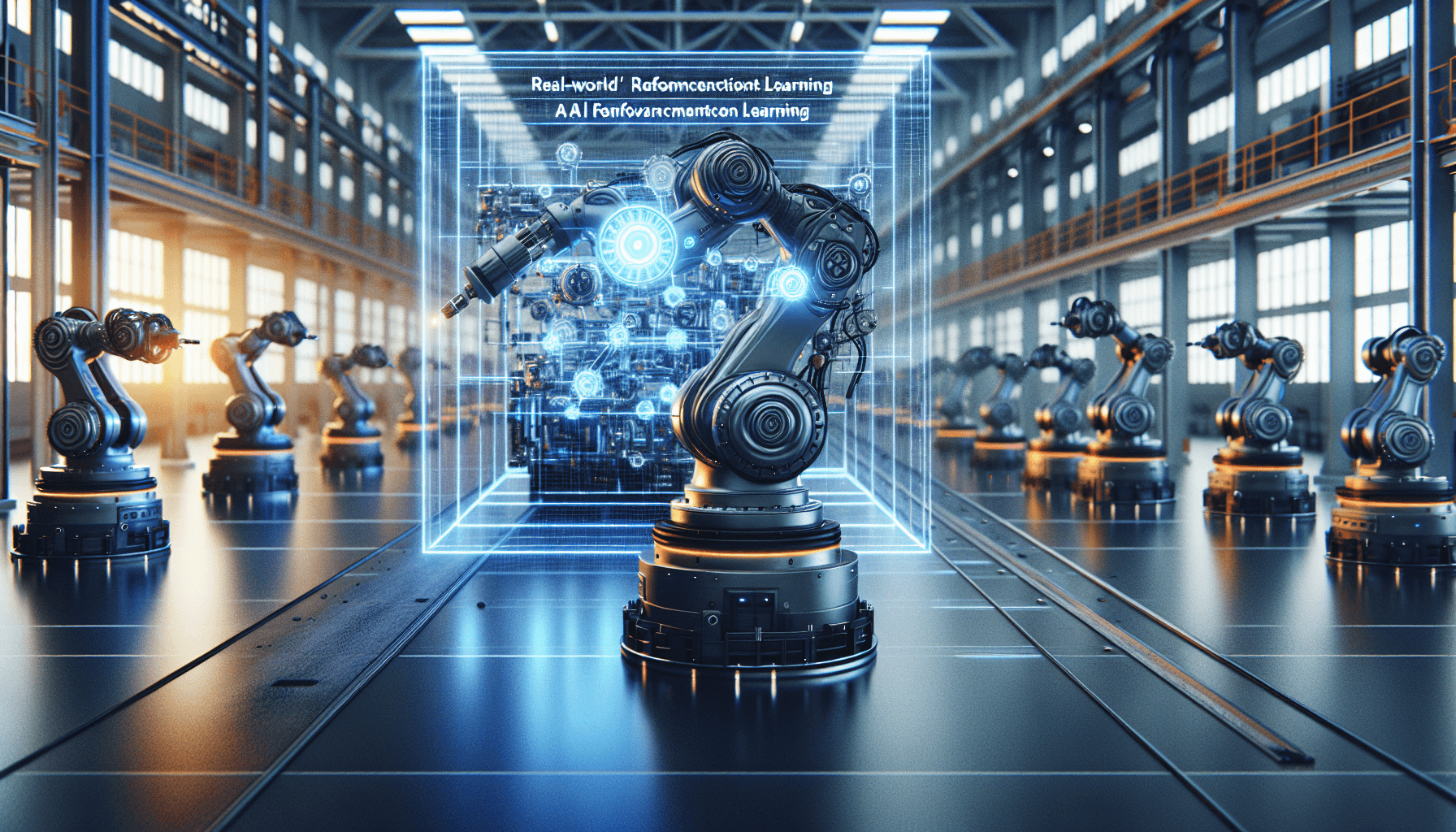
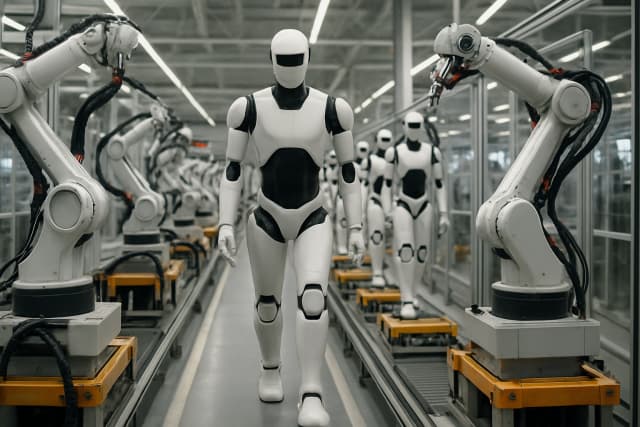
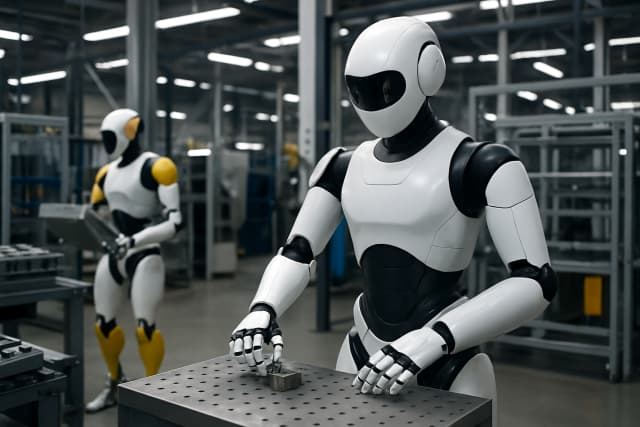
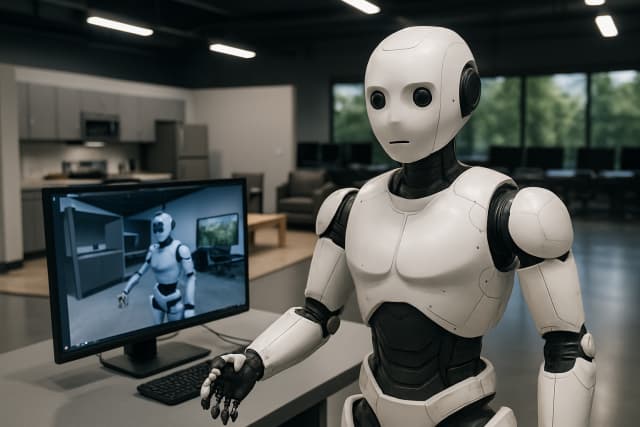



AgiBot has successfully deployed its Real-World Reinforcement Learning system, marking a pivotal shift toward what the industry calls 'physical AI' in industrial applications. The company unveiled a new generation of embodied AI robots and foundation models specifically designed for large-scale manufacturing deployment, representing one of the most significant advances in autonomous robotics to date. Unlike traditional simulation-based training, AgiBot's system enables robots to learn and adapt directly in real-world factory environments.
This breakthrough comes as the robotics industry faces mounting pressure to deliver practical solutions for the 433,000 open U.S. manufacturing jobs reported in December 2025. The deployment represents a fundamental evolution from lab-based AI to systems that can operate autonomously in unpredictable industrial settings, potentially reshaping how manufacturers approach automation and workforce challenges.
Breaking the Simulation Barrier
Traditional robotics AI has long relied on simulation environments for training, creating a significant gap between laboratory performance and real-world deployment. AgiBot's Real-World Reinforcement Learning system eliminates this barrier by enabling robots to learn directly from physical interactions with their environment. This approach allows the robots to adapt to variations in materials, lighting conditions, and unexpected obstacles that simulations often fail to capture.
The technology represents a fundamental shift in how industrial robots acquire new skills and adapt to changing production requirements. Rather than requiring extensive reprogramming for new tasks, AgiBot's system can learn through trial and error in actual factory conditions, dramatically reducing deployment time and costs for manufacturers.
Industrial Applications Take Center Stage
AgiBot's robots are already performing assembly, quality control, and object handling tasks at electronics plants in Nanchang, operating alongside human workers on active production lines. These deployments showcase the system's ability to handle complex, variable tasks that have traditionally required human dexterity and decision-making capabilities. The robots demonstrate particular strength in quality inspection processes, where their AI-driven analysis can detect defects that might escape human observation.
The company's foundation models enable robots to understand and execute tasks through natural language instructions, eliminating the need for complex programming interfaces. This capability allows floor supervisors to direct robots using simple verbal commands, making the technology accessible to manufacturers without extensive robotics expertise.
Addressing Manufacturing Labor Crisis
The timing of AgiBot's deployment aligns with a critical shortage in manufacturing labor, with projections indicating 1.9 million unfilled U.S. manufacturing jobs through 2033. The monthly quits rate of 1.4% in December 2025 highlights ongoing workforce stability challenges that autonomous systems could help address. Physical AI robots offer the advantage of 24/7 operation, particularly valuable for covering off-shifts where staffing proves most difficult.
Unlike traditional industrial robots that require extensive factory retrofitting, AgiBot's humanoid systems operate effectively in human-scale environments. This compatibility reduces implementation costs and allows manufacturers to deploy automation without major infrastructure investments, making advanced robotics accessible to smaller operations.
Competitive Landscape and Market Expansion
AgiBot's breakthrough occurs alongside significant developments from other industry players, including RobCo's 'Autonomous Alfie' humanoid and partnerships between Siemens, NVIDIA, and Humanoid for factory physical AI systems. Path Robotics has launched Rove, combining mobile robotic welding with quadruped mobility, while PIA Automation has established a dedicated embodied AI division for industrial applications. This rapid expansion indicates growing confidence in physical AI's commercial viability.
The market response has been substantial, with Goldman Sachs forecasting a $38 billion robotics market by 2035 and 1.4 million unit shipments. Early adopters in automotive, electronics, and semiconductor manufacturing report significant benefits in operational flexibility and workplace safety, suggesting strong potential for widespread adoption across industrial sectors.
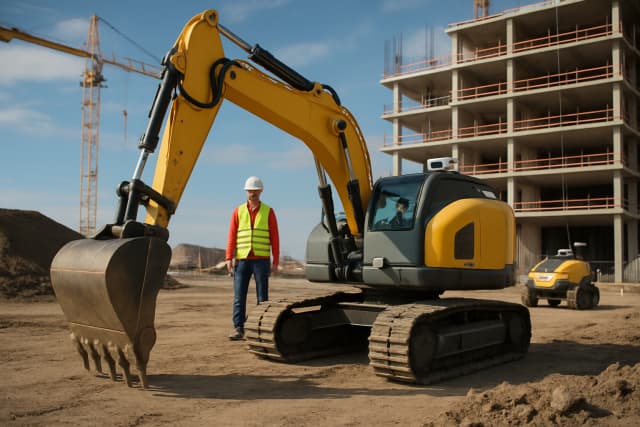
This marks a shift toward physical AI in real-world applications, moving beyond simulation to direct learning in industrial environments
Technical Challenges and Future Outlook
Despite promising deployments, current physical AI systems still face technical hurdles including slower cycle times compared to traditional industrial robots and reliability concerns that need addressing for full-scale adoption. Key challenges include extending Mean Time to Failure (MTTF), reducing costs to achieve competitive payback periods, and obtaining ISO 10218 safety certification for widespread industrial use. Supply chain constraints continue to limit rapid scaling of production.
Industry analysts predict a gradual transition to limited production applications in logistics and light manufacturing by 2027-2030, advising manufacturers to maintain focus on proven automation technologies while developing integration criteria for physical AI systems. The success of AgiBot's real-world learning approach may accelerate this timeline, particularly as the technology demonstrates improved reliability and cost-effectiveness in actual manufacturing environments.
Sources
- https://www.therobotreport.com
- https://roboticsandautomationnews.com
- https://www.youtube.com/watch?v=jn4jxLdDXBw
- https://www.ecpi.edu/blog/7-latest-innovations-in-robotics
- https://www.automate.org/robotics/industry-insights
- https://news.mit.edu/topic/robotics
- https://www.sciencedaily.com/news/computers_math/robotics/
- https://www.evsint.com/humanoid-robots-industrial-manufacturing-2026/
- https://sedonatec.com/feeds/blog/robots-factory
- https://www.slsbearings.com/sg-en/blog/humanoid-robots-in-manufacturing-the-future-of-factory-automation
- https://www.youtube.com/watch?v=4l1wfW4_ETM
- https://amdmachines.com/blog/the-future-of-humanoid-robots-in-manufacturing/
Leave a Comment