







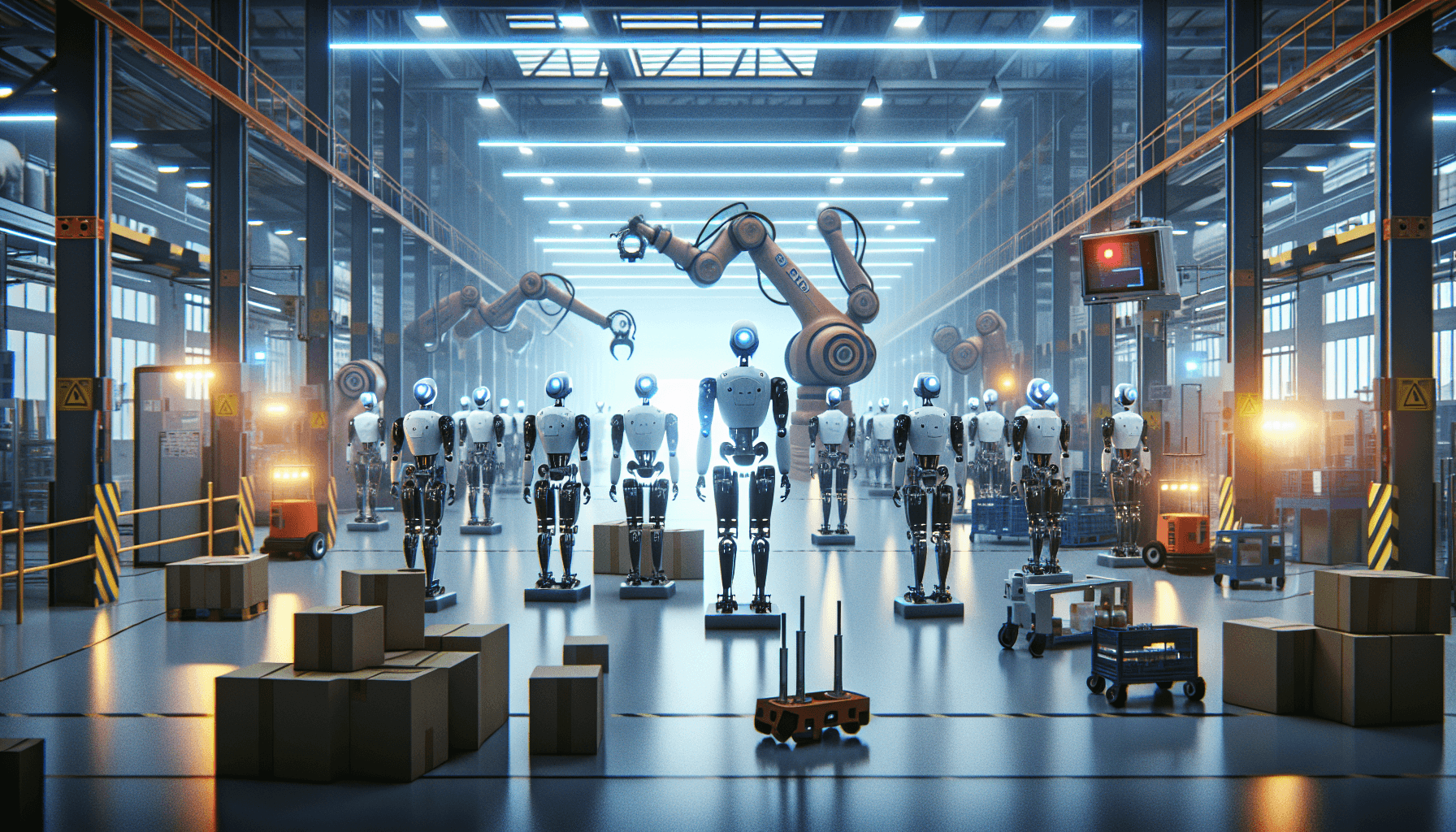
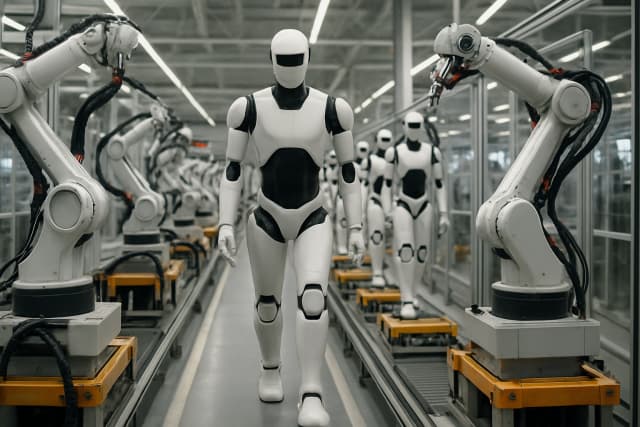









Autonomous humanoid robot fleets demonstrated a major breakthrough in early 2026, powering on independently, standing up, and self-organizing into coordinated teams without any human intervention. These systems use real-time communication, advanced motion planning, and sophisticated balance control to navigate together as unified units. The technology represents a fundamental shift from individual robot operations to truly autonomous fleet coordination, with immediate applications in factories, warehouses, and disaster response scenarios.
The milestone comes as industry experts declare that the foundational technical challenges in robotics have been largely solved, enabled by a 1,000x acceleration in compute power that has outpaced Moore's Law by 25 times. Companies like Unitary Robotics have showcased swarm systems in Beijing with extreme precision in martial arts-style coordination, while others demonstrate utility-focused robots like the H2 'Monkey King' that blend performance with practical applications. This breakthrough signals the emergence of scalable autonomous ecosystems that could revolutionize how robots work together in complex environments.
From Individual Robots to Coordinated Swarms
The breakthrough in autonomous coordination represents a quantum leap beyond traditional single-robot operations. These new systems demonstrate the ability to wake up, assess their environment, and immediately begin coordinating with nearby robots to form effective working units. The robots communicate in real-time, sharing navigation data, task assignments, and environmental observations to optimize their collective performance.
Unitary Robotics' G1 swarm system, revealed in Beijing, showcases perhaps the most dramatic example of this coordination capability. The robots perform martial arts-style movements with extreme precision, demonstrating not just individual dexterity but the ability to anticipate and complement each other's actions. This level of coordination suggests that robot teams could soon handle complex tasks that require multiple units working in perfect synchronization.
Technical Foundations Enable the Breakthrough
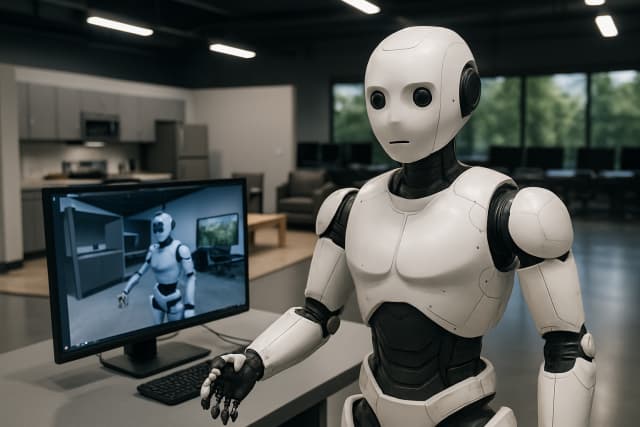
The autonomous coordination breakthrough builds on several converging technological advances discussed at Davos 2026. The 1,000x acceleration in compute power, combined with advanced simulation-to-reality transfer via digital twins, has enabled robots to process complex coordination algorithms in real-time. Vision-language-action models now allow robots to understand and execute complex commands while maintaining awareness of their teammates' actions and intentions.
Cheaper hardware costs have made it economically feasible to deploy multiple robots working together, rather than relying on single, expensive units. The robots can now process vast amounts of sensory data, predict maintenance needs, and adapt their behavior dynamically based on changing conditions. This technological foundation has shifted the focus from solving basic mobility and manipulation challenges to optimizing multi-robot collaboration and human-robot interaction.
Industrial Applications Drive Immediate Adoption
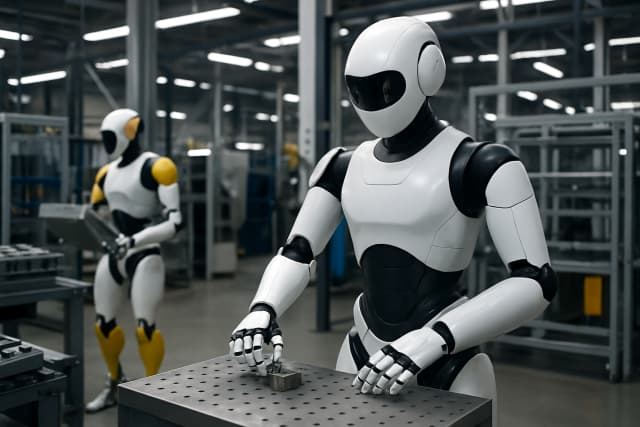
Manufacturing facilities represent the most immediate application for autonomous robot fleets, where coordinated teams can handle complex assembly processes, material handling, and quality control tasks. The robots' ability to self-organize means they can adapt to changing production requirements throughout the day, switching between different product lines or responding to equipment failures without human reprogramming. Companies like Agibot are deploying their embodied AI robots with foundation models specifically designed for large-scale industrial deployment.
Warehouse and logistics operations also benefit significantly from coordinated robot teams that can optimize picking routes, coordinate loading and unloading operations, and maintain inventory accuracy across multiple locations simultaneously. The H2 'Monkey King' robot exemplifies this utility-focused approach, combining advanced coordination capabilities with practical industrial applications. These deployments address critical labor shortages while providing 24/7 operational capability that human workers cannot match.
Beyond Manufacturing: Emergency Response Applications
Disaster response scenarios represent another crucial application area where autonomous robot coordination could save lives and improve response times. Self-organizing robot teams could deploy rapidly to disaster zones, automatically dividing search and rescue tasks, mapping dangerous areas, and coordinating with human first responders. The robots' ability to communicate and coordinate without human oversight becomes critical when communication infrastructure is damaged or when human coordination is impractical.
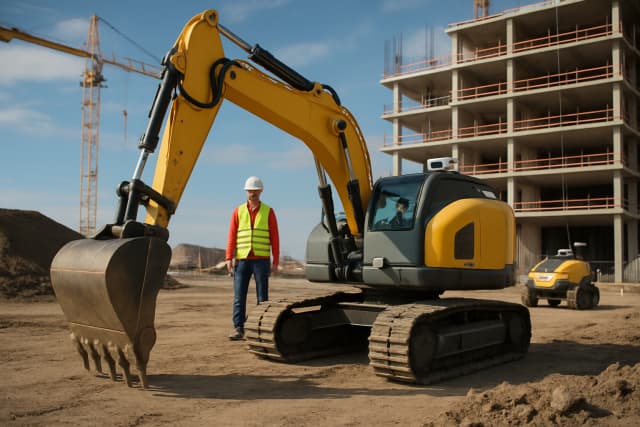
The coordination capabilities also extend to hazardous environment operations, where robot teams can work together to assess risks, share environmental data, and execute complex tasks while keeping human operators at a safe distance. As these systems continue to develop, the emphasis shifts toward manipulation tasks, risk assessment, and seamless human collaboration as robots move from isolated industrial zones into everyday working environments.
The hardest advances in robotics are behind us.
Market Implications and Future Development
The autonomous coordination breakthrough accelerates the timeline for widespread robot adoption across multiple industries. Goldman Sachs projects a $38 billion humanoid robot market by 2035, with 1.4 million units shipped, but coordinated fleet capabilities could drive adoption faster than these projections suggest. The ability to deploy multiple robots as coordinated teams provides immediate productivity benefits that justify higher initial investments.
Future development will focus on expanding coordination capabilities to larger fleets and more complex scenarios. Companies are investing heavily in reliability improvements, safety standards, and supply chain scaling to support widespread deployment. As Mech-Mind's CEO noted, with the foundational technical challenges solved, the industry can now focus on optimization, specialized applications, and seamless integration with existing industrial infrastructure. The shift from individual robot deployment to coordinated autonomous ecosystems represents a fundamental transformation in how industries will approach automation.
Sources
- https://www.youtube.com/watch?v=lf9BdOJ-VcY
- https://www.weforum.org/stories/2026/03/advances-in-autonomous-robotics-what-comes-next/
- https://novushitech.com/robotics-advancements-and-automation-2025/
- https://roboticsandautomationnews.com
- https://www.therobotreport.com
- https://www.automate.org/robotics/industry-insights
- https://news.mit.edu/topic/robotics
- https://sedonatec.com/feeds/blog/robots-factory
- https://www.youtube.com/watch?v=4l1wfW4_ETM
- https://www.slsbearings.com/sg-en/blog/humanoid-robots-in-manufacturing-the-future-of-factory-automation
- https://www.eetimes.com/humanoids-hit-the-factory-floor/
- https://amdmachines.com/blog/the-future-of-humanoid-robots-in-manufacturing/
Leave a Comment