





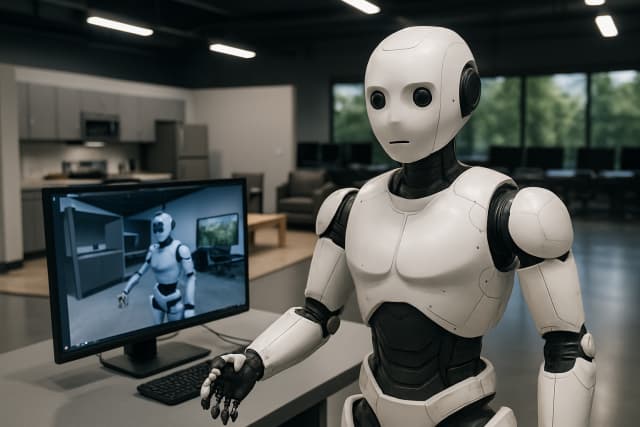









In a groundbreaking demonstration this February, autonomous humanoid robot fleets powered themselves on, stood up, and began coordinating complex tasks without any human intervention—marking a pivotal moment in robotics history. The advanced systems use real-time AI communication, sophisticated motion planning, and balance control to self-organize into working teams for factories, warehouses, and disaster response scenarios. One particularly striking showcase featured an H2 robot taking on the role of the Monkey King, highlighting how these coordinated ecosystems can integrate cultural elements while performing industrial tasks.
This breakthrough represents a fundamental shift from individual robots requiring human oversight to truly autonomous fleets capable of collective decision-making and task coordination. The development comes as the robotics industry faces mounting pressure to deliver scalable solutions for labor shortages, with 433,000 open manufacturing jobs in the U.S. as of December 2025 and 1.9 million unfilled positions projected through 2033 according to Deloitte research.
The Technology Behind Autonomous Coordination
The February 2026 demonstration showcased robots utilizing advanced motion planning algorithms that allow individual units to calculate optimal paths while considering the movements of their fleet partners. Each robot maintains constant communication through real-time AI networks, sharing positional data, task assignments, and environmental observations instantaneously. This distributed intelligence enables the fleet to adapt to changing conditions without centralized control systems.
Balance control systems have evolved beyond individual stability to include formation-aware positioning, where robots adjust their stance and movement patterns based on nearby units' actions. The Unitree G1 humanoid robot martial arts swarm in Beijing exemplified this precision, with multiple units performing synchronized combat movements that required split-second coordination and spatial awareness. These technical advances build upon years of research in multi-agent systems and represent the first practical implementation of truly autonomous robot teams.
Industrial Applications and Real-World Deployments
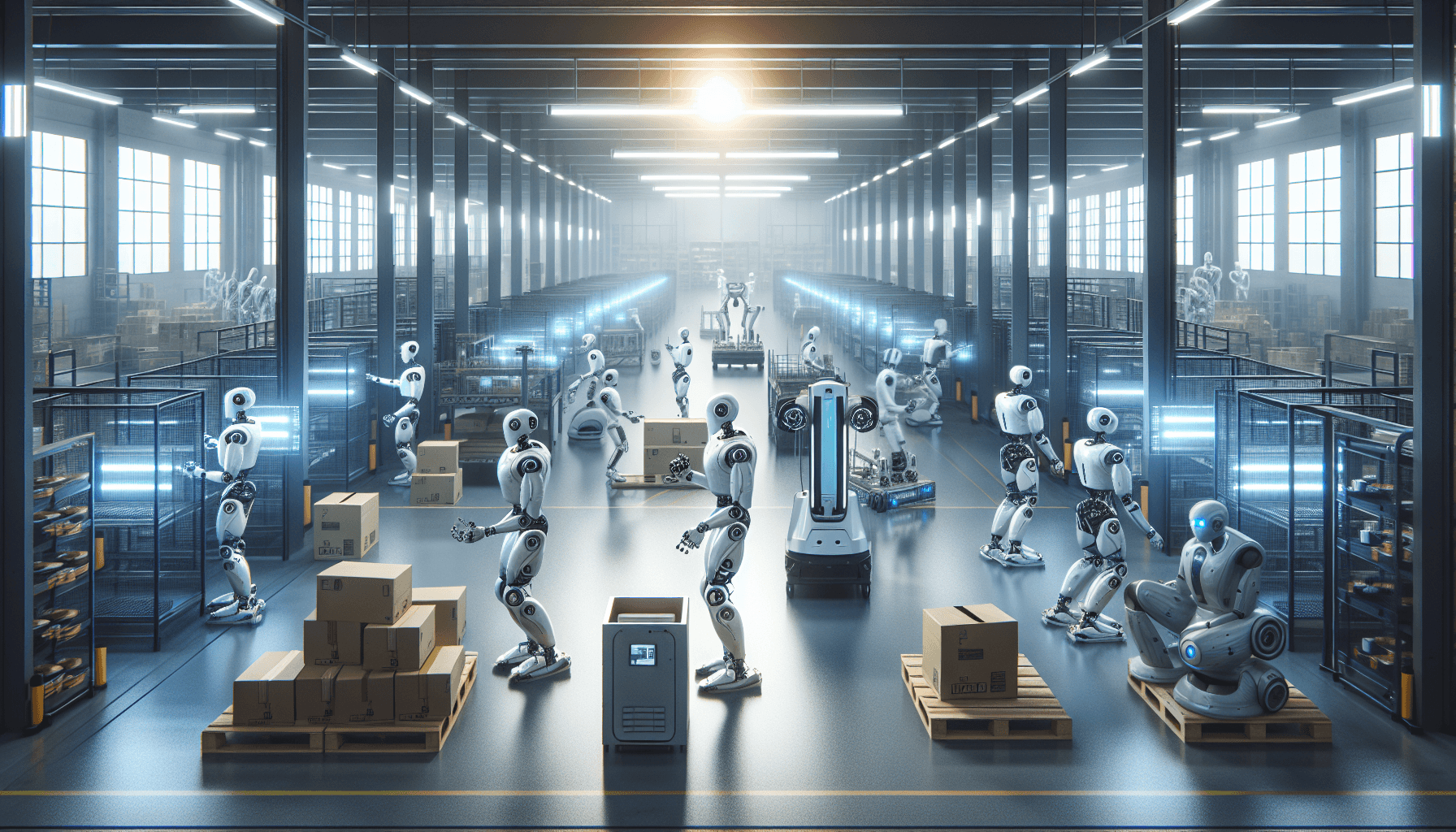
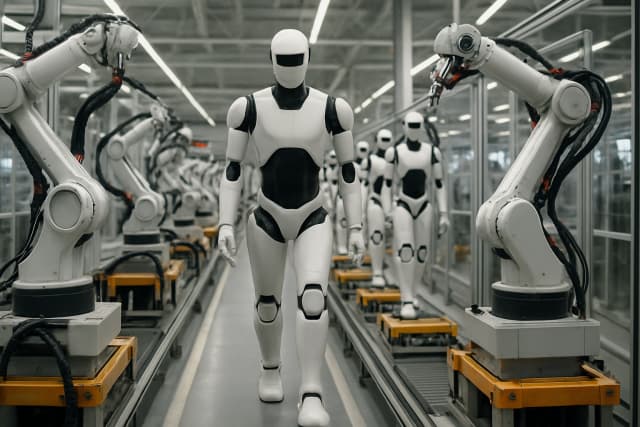
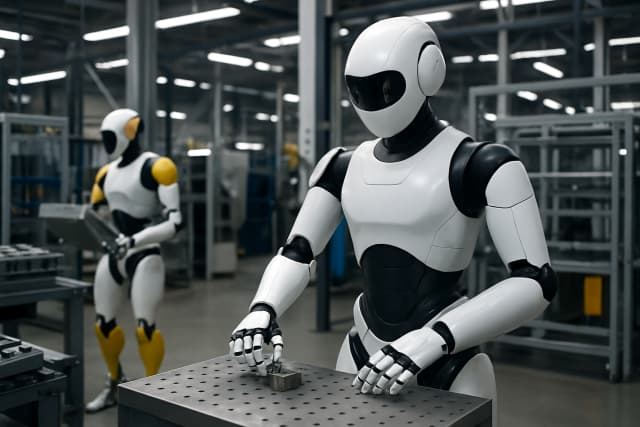
Manufacturing facilities are emerging as the primary testing ground for these autonomous fleets, where coordinated robots can handle complex material flows without the rigid programming required by traditional automation systems. Unlike fixed robotic arms that require extensive retrofitting of factory floors, these humanoid teams can navigate existing infrastructure and adapt to layout changes in real-time. Early deployments focus on tasks like coordinated assembly line work, where multiple robots handle different components of the same product simultaneously.
Warehouse operations represent another critical application area, where autonomous fleets can optimize picking routes collectively rather than operating as isolated units. The robots share inventory data and adjust their paths to avoid congestion while maximizing throughput—a capability that traditional warehouse automation systems struggle to achieve. Disaster response scenarios offer perhaps the most compelling use case, as coordinated robot teams can enter dangerous environments and work together on search and rescue operations without risking human lives.
Cultural Integration and Human-Robot Interaction
The inclusion of cultural elements, such as the H2 robot's Monkey King demonstration, signals an important evolution in how robotics companies approach human acceptance of autonomous systems. By incorporating familiar cultural references and behaviors, these fleets can operate more naturally in human environments and reduce the psychological barriers that often accompany automation deployment. This approach recognizes that successful robotics integration requires not just technical capability but also social and cultural compatibility.
The martial arts demonstration by Unitree's humanoid swarm in Beijing served multiple purposes beyond showcasing technical precision—it demonstrated that robot fleets could engage in coordinated activities that humans find aesthetically pleasing and culturally meaningful. This cultural integration strategy may prove crucial for gaining public acceptance of autonomous robot deployments in urban environments and shared workspaces. Companies are increasingly recognizing that the path to widespread robotics adoption requires addressing human emotional responses alongside technical requirements.
Market Impact and Competitive Landscape
The autonomous fleet capability represents a significant competitive advantage for companies like Unitree and other robotics manufacturers developing coordinated systems. Goldman Sachs forecasts a 40% drop in manufacturing costs for humanoid robotics, projecting a $38 billion market by 2035 with 1.4 million units deployed. Companies demonstrating fleet coordination capabilities are positioning themselves to capture larger portions of enterprise contracts, as businesses seek comprehensive automation solutions rather than individual robot purchases.
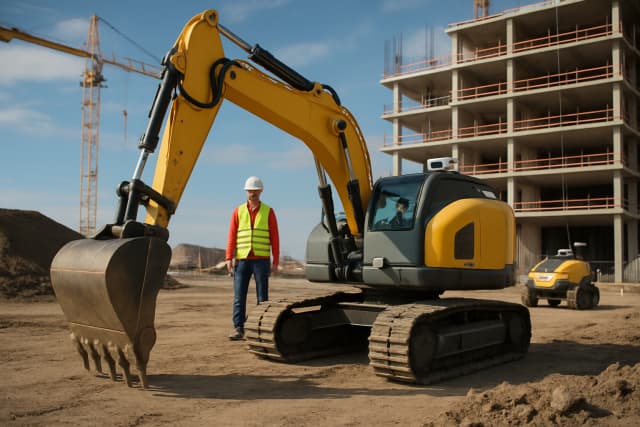
This technological breakthrough is accelerating funding and development across the robotics sector, with companies like Bedrock Robotics raising $80 million for autonomous construction machinery and established players like NVIDIA forming partnerships for broader autonomous vehicle deployment. The shift toward fleet-based robotics solutions is creating new business models focused on robotics-as-a-service offerings, where companies can deploy coordinated teams without massive capital investments. Industry analysts predict that by 2030, autonomous fleet capability will become a standard requirement for enterprise robotics contracts.
These coordinated ecosystems represent the next evolution in robotics—moving from single-unit automation to true collective intelligence that can adapt and respond to dynamic industrial environments.
Challenges and Future Development
Despite the promising demonstrations, autonomous robot fleets still face significant technical hurdles before widespread commercial deployment. Mean Time To Failure rates remain below production-grade requirements, and safety certification processes for coordinated systems are more complex than individual robot approvals. The challenge of ensuring reliable communication between fleet members in environments with electromagnetic interference or physical obstructions continues to limit deployment scenarios.
Future development efforts are focusing on improving the resilience of fleet coordination systems and reducing the computational overhead required for real-time multi-robot planning. Companies are investing heavily in edge computing solutions that allow robots to maintain coordination capabilities even when central communication systems fail. The next major milestone will likely involve fleets that can dynamically reconfigure their coordination strategies based on task requirements, environmental conditions, and individual unit capabilities—moving beyond predetermined coordination patterns to truly adaptive collective intelligence.
Leave a Comment