






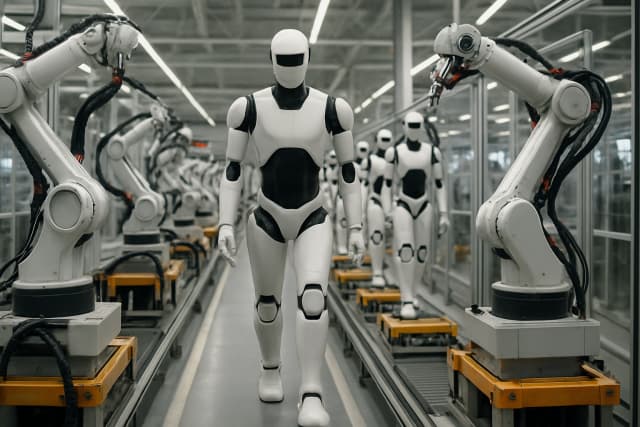
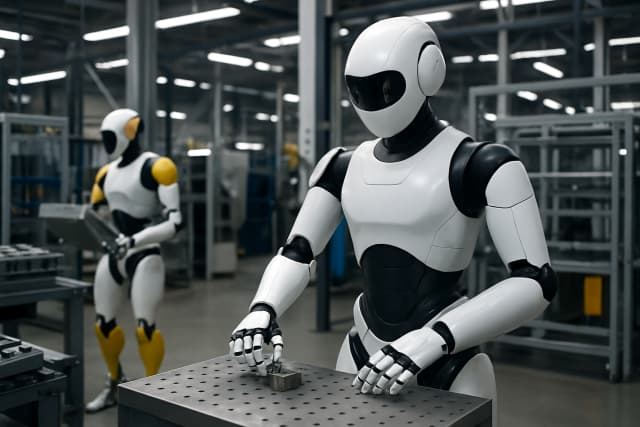
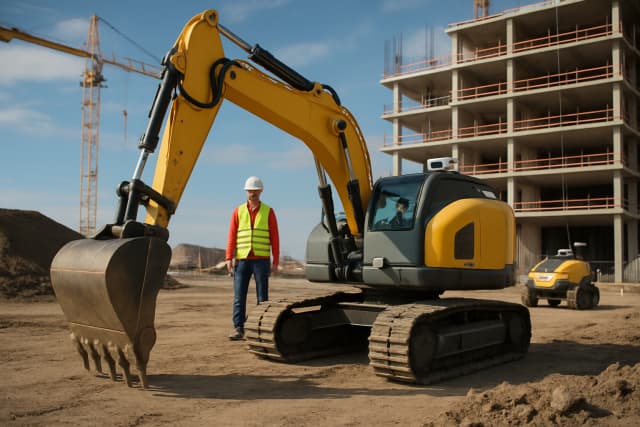



The robotics industry has reached a pivotal inflection point, with autonomous systems now operating at industrial scale across ports, warehouses, factories, and logistics operations. According to the World Economic Forum's latest assessment presented at Davos 2026, the core technical groundwork for physical AI is largely complete, marking a fundamental shift from research and development to widespread commercial deployment. This breakthrough comes as the industry benefits from a massive 1,000x increase in compute acceleration over the past eight years, outpacing Moore's Law expectations by 25x.
The convergence of AI-driven autonomy, simulation-to-real transfer capabilities, and dramatically improved hardware economics is driving this transformation. Where autonomous robots were once confined to controlled laboratory environments, they are now tackling complex, unstructured tasks in real-world industrial settings, with domestic and consumer applications representing the next frontier for expansion.
Technical Breakthroughs Drive Industrial Adoption
The rapid advancement in autonomous robotics stems from three key technological pillars that have matured simultaneously. Vision-Language-Action models now enable robots to interpret complex instructions and navigate unfamiliar situations by combining natural language understanding with visual input and sophisticated action planning. This represents a fundamental leap from traditional programmed robotics to systems that can adapt and learn in real-time.
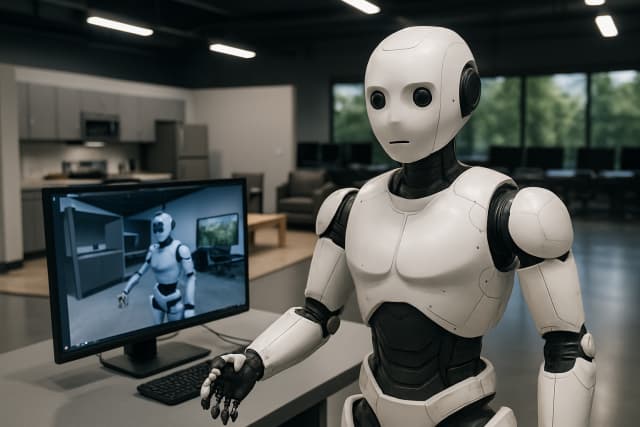
Equally transformative is the emergence of simulation-to-real transfer capabilities, where robots undergo extensive training in virtual environments using digital twins and synthetic data before deployment. This approach dramatically reduces the time and cost associated with robot training while enabling systems to encounter and learn from scenarios that would be impractical or dangerous to replicate in physical environments. The International Federation of Robotics highlights that agentic AI systems combining analytical and generative AI capabilities are now enabling robots to operate more independently in complex, dynamic environments.
Compute Power Removes Historical Bottlenecks
The World Economic Forum's analysis reveals that computational limitations, long considered a primary constraint on robotics advancement, are no longer the primary bottleneck they once represented. The 1,000x increase in massive compute acceleration over eight years has fundamentally changed the economics and capabilities of autonomous systems development. This acceleration, which exceeded Moore's Law projections by a factor of 25, has enabled real-time processing of complex AI models directly on robotic platforms.
Simultaneously, hardware improvements have delivered better performance at lower costs, creating a virtuous cycle for development and testing. These advances in core components, combined with breakthroughs in AI and machine learning, have expanded the practical capabilities of autonomous systems beyond what was previously economically viable. The result is robots that can process vast amounts of sensory data, make complex decisions, and adapt to changing conditions without requiring constant human intervention or expensive computational infrastructure.
Industrial Deployment Examples Signal Market Maturity
Leading technology companies are demonstrating the commercial viability of autonomous systems through significant deployments and investments. Standard Bots recently secured $200 million in Series C funding, reflecting strong investor confidence in AI-native industrial robotics, while Nvidia's AI factory manager blueprint showcases how autonomy is being integrated into centralized, real-time monitoring and optimization of factory operations. These developments underscore the transition from pilot projects to scalable business models.
In the logistics sector, Einride and EASE Logistics have deployed SAE Level 4 autonomous trucks in proof-of-concept service between warehouses in Ohio, demonstrating the practical application of full autonomy in freight transportation. Festo's GripperAI represents another significant advancement, enabling flexible robot handling of mixed and randomly positioned products without extensive programming, addressing one of the key challenges in variable manufacturing environments. These examples reflect the industry's movement toward systems that can handle unpredictable, real-world conditions rather than carefully controlled scenarios.
Expansion Beyond Structured Environments
While current deployments have focused primarily on structured industrial environments, the robotics industry is preparing for expansion into more complex, unstructured settings. Ports, warehouses, factories, logistics operations, and healthcare facilities have served as proving grounds for autonomous systems, providing the operational experience and refinement necessary for broader applications. The success in these environments has validated both the technical capabilities and economic benefits of autonomous robotics at scale.
Industry analysts identify domestic and consumer applications as the next major frontier, representing environments with significantly more variability and unpredictability than current deployment sites. The Robot Report highlights expanding autonomous mobility applications including robotaxis, autonomous deliveries, and expanded trucking partnerships as indicators of this broader trend. As systems prove their reliability and cost-effectiveness in industrial settings, the foundation is being established for autonomous robots to operate safely and effectively in human-centered environments with minimal infrastructure modification.
The core technical groundwork for physical AI is largely complete, and robots are now operating at scale in industrial settings.
Market Implications and Future Outlook
The declaration that core technical challenges have been solved represents a watershed moment for the robotics industry, signaling a shift from technology development to market expansion and optimization. This transition is expected to accelerate adoption rates as companies focus on deployment, integration, and scaling rather than fundamental research and development. The combination of proven technical capabilities, improved economics, and demonstrated industrial success creates conditions for rapid market growth across multiple sectors.
The implications extend beyond individual companies to entire supply chains and business models, as autonomous systems become integral to operational efficiency and competitive advantage. Organizations that successfully integrate these technologies early may gain significant advantages in cost reduction, operational flexibility, and service quality. As the technology moves from structured to unstructured environments, the potential market opportunity expands dramatically, encompassing applications from household assistance to complex service industries that previously seemed beyond the reach of autonomous systems.
Sources
- https://www.weforum.org/stories/2026/03/advances-in-autonomous-robotics-what-comes-next/
- https://ifr.org/news
- https://novushitech.com/robotics-advancements-and-automation/
- https://www.youtube.com/watch?v=EJ1oakzzfn0
- https://www.ecpi.edu/blog/7-latest-innovations-in-robotics
- https://roboticsandautomationnews.com
- https://news.mit.edu/topic/robotics
- https://www.therobotreport.com
- https://www.youtube.com/watch?v=JI4hlf2bq6E
- https://www.fictiv.com/articles/humanoid-robotics-manufacturing-impact
- https://www.automotivemanufacturingsolutions.com/automation/how-ai-powered-humanoid-robots-are-changing-auto-manufacturing-at-bmw-tesla-and-mercedes-benz/304574
- https://www.slsbearings.com/sg-en/blog/humanoid-robots-in-manufacturing-the-future-of-factory-automation
Leave a Comment