











Amazon Web Services this week released a cluster of open-source infrastructure projects aimed squarely at the messy, fast-growing problem of running AI agents in production. Loom, a reference platform for governing agents at enterprise scale, arrived alongside Blocks, a TypeScript framework for building agent backends, newly public Smithy API models, and an experimental low-latency runtime for serverless workloads. Taken together, the releases mark one of the most concentrated infrastructure pushes from a major cloud provider this year, landing in the same week that LocalStack shipped version 2.0 and Docker introduced hardened base images. The timing is not incidental: as AI coding agents and autonomous workflows move from demos into enterprise pipelines, the underlying control planes for identity, governance, and runtime performance have become the new competitive battleground.
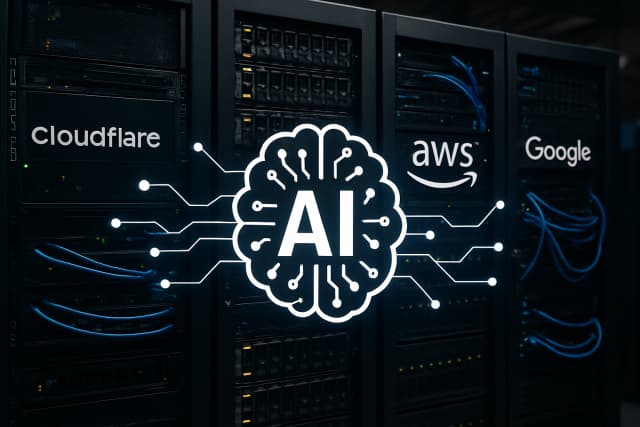
The developer tools landscape in 2026 has splintered into two urgent priorities: making AI-native coding assistants genuinely useful, and building the infrastructure to govern what those assistants and their agentic offspring actually do once deployed. Greptile's 2026 roundup of the category now spans coding agents, repo-aware assistants, PR reviewers, production debugging agents, and security tools, a far cry from the autocomplete-era assistants of just a few years ago. AWS's latest open-source drop signals that the company sees governance and low-latency execution, not just model quality, as the next battleground, putting it in direct competition with Cloudflare, Google, and a wave of well-funded AI infrastructure startups all racing to own the plumbing beneath the agent economy.
A Coordinated Infrastructure Push
AWS did not release Loom, Blocks, and its Smithy API models in isolation. The four announcements — Loom for agent governance, Blocks for agent backend development, open Smithy API models, and an experimental low-latency runtime — read as a coordinated attempt to control multiple layers of the AI agent stack simultaneously. Loom is positioned as a reference platform specifically for governing AI agents at enterprise scale, addressing a problem that has grown more urgent as companies deploy autonomous agents with real permissions inside production systems.
Blocks, meanwhile, targets developers directly. As an open-source TypeScript framework built to let AI agents construct their own backends, it lowers the barrier for teams experimenting with agentic application architectures without requiring them to hand-roll infrastructure from scratch. The decision to open-source Smithy's API models further extends AWS's long-running strategy of using open interface specifications to make its own tooling the default choice for developers building interoperable, API-driven systems.
Racing Toward Low-Latency Serverless
The experimental low-latency runtime AWS introduced this week addresses a persistent complaint about serverless computing: cold-start delays and inconsistent performance under agentic workloads that fire off rapid, unpredictable bursts of compute requests. As AI agents increasingly chain together multiple tool calls and API invocations in real time, the tolerance for latency has shrunk considerably compared to traditional request-response web applications.
This runtime release lands alongside other infrastructure moves this week that point to the same underlying pressure. Docker's launch of hardened base images tightens security across container build pipelines precisely as more automated, agent-driven code gets shipped into production with less human review. And Radius, a project focused on cloud-native application orchestration, became a CNCF Sandbox Project, another signal that the industry is consolidating around shared, vendor-neutral standards for deploying complex distributed systems.
LocalStack and the Local-First Counterweight
Not every notable release this week came from a hyperscaler. LocalStack 2.0, a major update to the widely used tool for emulating cloud services locally, shipped as one of the clearest infrastructure-focused releases in this cycle. For development teams wary of racking up cloud costs or waiting on live AWS resources during testing, LocalStack's local cloud emulation has become a staple of CI/CD pipelines, sitting alongside GitHub Actions, Jenkins, CircleCI, and Azure DevOps as core parts of the modern build-test-deploy toolchain.
The contrast between LocalStack's local-first philosophy and AWS's cloud-native governance push captures a broader tension in developer tooling right now. Teams want the convenience and power of cloud-scale AI infrastructure, but they also want the ability to test, iterate, and validate locally before anything touches production. Cloudflare's own infrastructure moves this week, including its migration of the cdnjs library to its Developer Platform handling roughly nine billion daily requests, underscore just how much production traffic is now riding on these platform decisions.
The tools that win in this cycle won't be the ones with the flashiest demos. They'll be the ones enterprises can actually govern, audit, and trust to run unattended in production.
Where This Leaves Developers
For working developers, the practical effect of this week's releases is more choice, and more complexity, in how they architect AI-powered applications. A team building an agentic product today might reach for AWS Blocks to scaffold a backend, Loom to enforce governance policies once that agent is live, LocalStack to test the whole pipeline locally, and GitHub Copilot or a comparable AI-native editor to write the code in the first place. Visual Studio Code and JetBrains remain the dominant environments tying much of this together, with JetBrains in particular emphasizing language-agnostic support as teams increasingly mix Rust, Go, Kotlin, and Zig alongside more established languages.
The open-sourcing of Smithy's API models also matters beyond AWS's immediate ecosystem. Public, well-documented API models reduce friction for third-party tool builders, including the wave of AI-native startups building repo-aware assistants and production debugging agents that Greptile's 2026 roundup identifies as a defining category of the current moment. Whether AWS's bet on governance-first infrastructure wins out over more developer-centric platforms like Replit or Gitpod will likely depend on how quickly enterprises move from experimenting with AI agents to trusting them with real operational responsibility, a transition that infrastructure like Loom is explicitly designed to accelerate.
Sources
- https://www.greptile.com/content-library/14-best-developer-productivity-tools
- https://thectoclub.com/tools/best-software-development-tools/
- https://visualstudio.microsoft.com/
- https://www.softwaretestinghelp.com/software-development-tools/
- https://github.com/agamm/awesome-developer-first
- https://www.cloudzero.com/blog/software-development-tools/
- https://www.timechamp.io/blogs/best-software-development-tools
- https://www.muchskills.com/reports/top-developer-tools
- https://www.designrush.com/agency/software-development/trends/best-software-development-tools
- https://geekflare.com/software/best-software-development-tools/
- https://www.g2.com/best-software-companies/top-development
Leave a Comment