





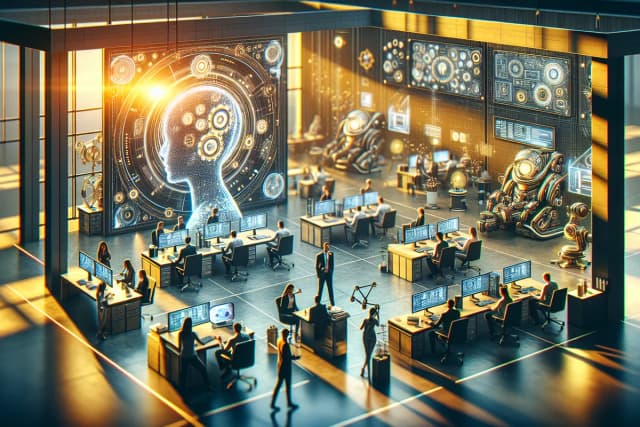











Google has donated three infrastructure projects to the Cloud Native Computing Foundation, a move that lays bare how fast cloud architecture is being rebuilt around autonomous AI agents rather than traditional applications. The donations, gVisor, Agent Substrate, and OpenRL, together form what Google describes as an open stack purpose-built for agentic workloads: sandboxed execution, stateful agent management, and Kubernetes-native reinforcement learning. The contribution lands the same week Anthropic added OpenTelemetry tracing to its Claude Platform and AWS expanded its own open-source agent tooling, underscoring a sudden, coordinated scramble among the industry's biggest players to own the plumbing beneath AI coding agents and autonomous systems.
For the past two years, the AI agent conversation has centered on model capability. That is changing. As agents like Claude Code, OpenAI Codex, and Cursor move from writing snippets of code to operating inside source repositories, calling external services, and persisting state across long-running tasks, the harder problem has become infrastructure: how do you safely sandbox an agent that can execute arbitrary code, how do you keep its workload warm and stateful between invocations, and how do you evaluate whether its behavior is actually improving. Google's donation to the CNCF is a direct answer to that problem, and its timing, arriving alongside a wave of agent-tooling releases from Anthropic, AWS, and independent open-source developers, suggests the industry has entered a new phase where agent infrastructure, not agent intelligence, is the next competitive battleground.
Three Projects, One Agentic Stack
Google's donation is notable not just for its scale but for its coherence. gVisor, a container sandboxing runtime Google has maintained internally for years, provides isolated execution environments that prevent untrusted or AI-generated code from touching host systems directly, a capability that becomes essential once autonomous agents are writing and running their own code without a human reviewing every line first.
Agent Substrate addresses a different problem: keeping agent workloads warm and stateful. Unlike traditional stateless microservices, AI agents often need to retain context, memory, and intermediate results across long sequences of actions, and Google's tooling is designed to manage pools of warm workers so that agents do not have to cold-start every time they are invoked. OpenRL rounds out the stack by coordinating Kubernetes-native reinforcement-learning workflows and evaluation sandboxes, giving organizations a standardized way to test and refine agent behavior before deploying it into production.
Taken together, the three projects read less like a grab-bag of donations and more like a blueprint. Google is effectively proposing that the industry standardize around sandboxed execution, persistent state management, and continuous evaluation as the three pillars any serious agentic infrastructure needs, and it is doing so through the CNCF rather than keeping the stack proprietary.
Why the CNCF, Why Now
The choice to route these projects through the CNCF rather than release them independently carries strategic weight. The foundation already governs Kubernetes, the dominant orchestration layer for cloud infrastructure, and by donating agent-specific tooling into that same governance structure, Google is betting that agentic workloads will be managed inside the same clusters and operational playbooks that already run enterprise software, rather than through an entirely separate AI-specific stack.
That bet has commercial logic behind it. Enterprises have spent a decade building operational maturity around Kubernetes, including security tooling, compliance processes, and staffing. If agent infrastructure can be absorbed into that existing world instead of requiring a parallel one, adoption friction drops considerably. It also positions Google favorably against AWS and Microsoft, both of which are racing to define the operational standards for agentic AI; AWS, for its part, expanded its own open-source Strands SDK for building agents this same week and introduced an open-source workspace for its Kiro coding tool.
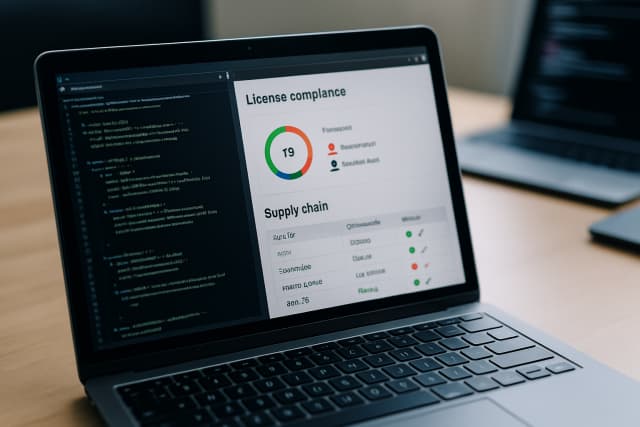
The move also lands against a broader backdrop of concern about AI agents as a supply-chain risk. Security researchers have increasingly flagged that tools like Claude Code, Codex, and Cursor can access source code, credentials, and external services with minimal oversight, prompting calls for stricter procurement controls, secrets management, and network-egress policies. Donating sandboxing infrastructure to a neutral foundation is, in part, a response to that pressure, giving enterprises a vetted, open way to contain what agents are allowed to touch.
A Week of Parallel Moves Across the Industry
Google's donation did not arrive in isolation. The same week, Anthropic added OpenTelemetry trace export to its Claude Platform, covering the Messages API, Claude Managed Agents, and Claude SDKs, allowing enterprises to route agent telemetry into observability systems they already operate rather than relying on Anthropic-specific dashboards. That move mirrors the same underlying anxiety driving Google's donation: as agents take on more autonomous responsibility, organizations need visibility and containment mechanisms that plug into existing enterprise tooling.
Smaller, independent projects pointed in the same direction. numbrone emerged as an open-source shell tool for coordinating coding agents, acting as a kind of chief of staff that routes tasks to project-specific manager agents running parallel workers in Git worktrees. sandbox-mcp, meanwhile, launched as an MCP server for automating Windows Sandbox, giving agent-generated software a disposable, isolated environment for testing. Both tools, developed outside any major vendor, suggest that the demand for agent sandboxing and coordination infrastructure is bubbling up from practitioners as fast as it is being addressed by platform giants.
The cumulative effect is an industry quietly re-platforming itself. Where cloud-native computing over the past decade was organized around containers, microservices, and continuous deployment for human-written applications, the infrastructure conversation in late 2026 is now organized around sandboxing, statefulness, and evaluation for autonomous agents, a shift significant enough that the CNCF itself is restructuring its intake priorities to accommodate it.
The next generation of software isn't just going to be written by agents, it's going to be run by them continuously, which means the control plane underneath has to be rethought from the ground up for sandboxing, state, and evaluation.
What It Means for Enterprises and Developers
For enterprises already running Kubernetes clusters, the practical upshot of Google's donation is a faster, lower-risk path to deploying agentic workloads without having to build custom sandboxing and state-management layers in-house. Early adopters are likely to be organizations that are already experimenting with coding agents like Cursor, which R Systems announced plans to deploy across its software-development operations, and companies running agent-driven customer service or data-processing pipelines where runaway or compromised agent behavior carries real financial and security risk.
Sources
- https://www.infoq.com/Programming-Languages/news/
- https://www.infoworld.com/article/4245298/python-is-de-jitted-but-still-de-lovely.html
- https://www.educative.io/blog/developer-new-tech-updates
- https://www.cio.com/software-development/
- https://www.infoworld.com/article/4200337/g-sharp-language-for-net-borrows-from-go-kotlin-and-swift.html
- https://www.infoworld.com/article/4225734/apple-touts-simpler-and-clearer-code-with-swift-6-4.html
- https://www.infoworld.com/programming-languages/
- https://www.infoworld.com/application-development/page/6/
- https://www.infoq.com/programming-languages/
- https://adtmag.com/articles/list/news.aspx
- https://dev.to/githubopensource/claude-fable-52-open-source-weight-drops-and-agentic-trading-tools-hf8
Leave a Comment