






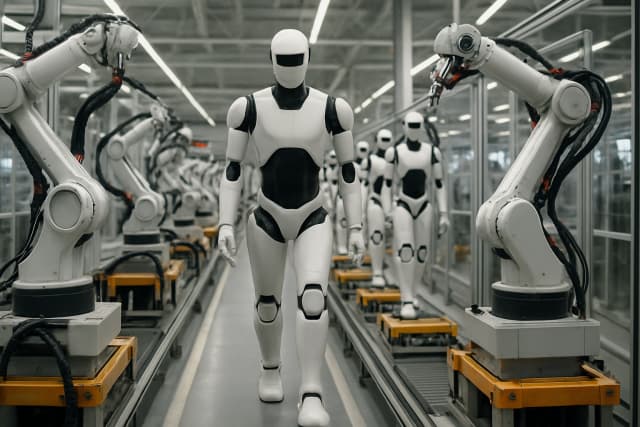
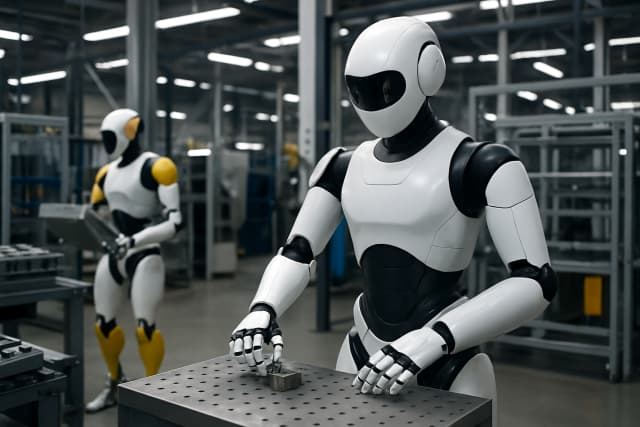
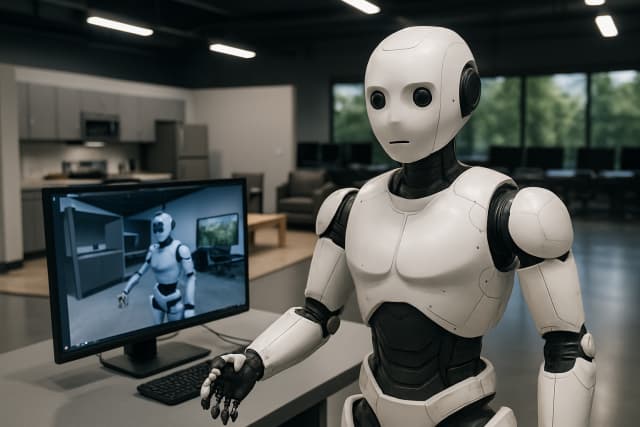
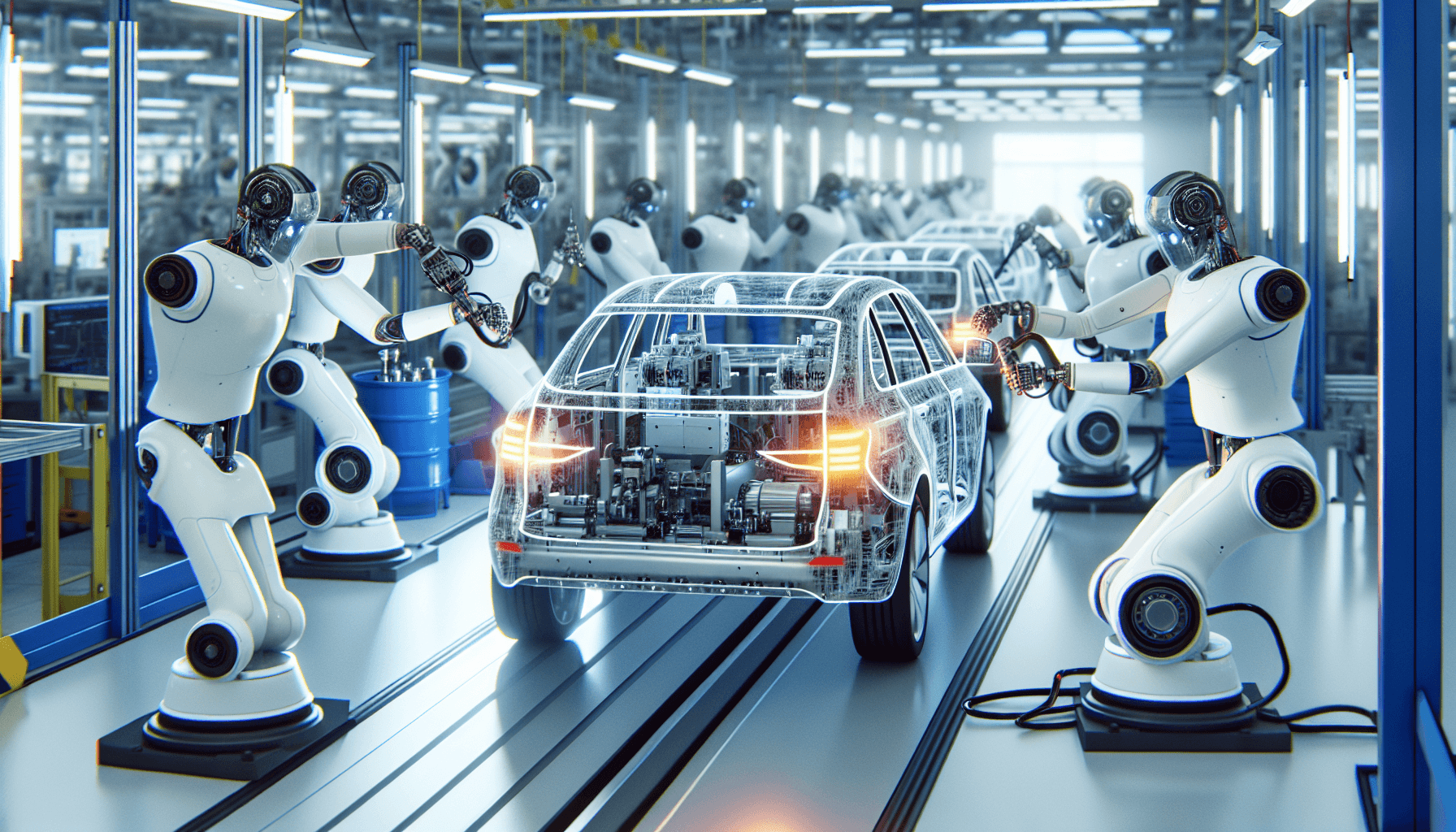



The automotive industry is leading a massive shift toward humanoid robotics in manufacturing, with Tesla, BMW, Hyundai, and Chinese automakers deploying AI-driven robots across their production lines in 2026. Tesla is scaling Optimus production toward 1 million units annually at its Fremont factory, while BMW's partnership with Figure AI has produced over 30,000 X3 SUVs using humanoid robots at its Spartanburg facility. Goldman Sachs now forecasts the humanoid robot market will reach $38 billion by 2035, driven by severe labor shortages and the robots' ability to work 24/7 in existing factory infrastructure.
This deployment wave represents a fundamental transformation in manufacturing automation, as companies abandon costly facility retrofits in favor of human-scale robots that can adapt to existing workspaces. With 433,000 open manufacturing jobs in the US as of December 2025 and projections of 1.9 million unfilled positions through 2033, automakers are turning to humanoid robots to maintain production schedules while reducing costs by up to 40%.
Tesla Leads Production Scale-Up
Tesla's Optimus humanoid robot program has reached a critical inflection point, with the company targeting 1 million units per year at its Fremont factory. The robots are currently operating on pilot production lines, handling internal tasks like parts handling and basic assembly operations. This represents the most ambitious humanoid robot manufacturing initiative by any automaker to date.
The Fremont deployment serves as Tesla's testing ground for broader humanoid integration across its global manufacturing network. Unlike traditional industrial robots that require extensive programming and fixed installations, Tesla's Optimus robots use Vision-Language-Action AI to learn new tasks and adapt to changing production requirements in real-time.
BMW and Hyundai Expand Factory Operations
BMW's partnership with Figure AI has achieved significant production milestones at its Spartanburg, Georgia facility, where humanoid robots have contributed to manufacturing over 30,000 X3 SUVs in 2026. The robots handle battery and component assembly tasks that were previously bottlenecks in the production line. BMW is now expanding this program to its Leipzig facility based on the Georgia success.
Hyundai has taken a different approach through its collaboration with Boston Dynamics, deploying Atlas humanoid robots for hazardous heavy lifting and material handling tasks. This strategy focuses on removing human workers from dangerous environments while maintaining production efficiency. The robots can lift components weighing up to 45 pounds with precision that matches or exceeds human capabilities.
Chinese Manufacturers Scale Battery Production
Chinese automotive firms including AgiBot and SAIC have deployed humanoid robots extensively on battery production lines, focusing on assembly, quality control, and object handling at industrial scale. These deployments represent some of the largest humanoid robot installations globally, with hundreds of units operating simultaneously in coordinated workflows. The robots use Real-World Reinforcement Learning to continuously improve their performance without human intervention.
The Chinese approach emphasizes fleet coordination and autonomous operation, with robots communicating in real-time to optimize production flow. This model is particularly effective for battery manufacturing, where precise handling and quality control are critical for safety and performance standards.
Market Growth Driven by Labor Crisis
Goldman Sachs projects the humanoid robot market will reach $38 billion by 2035, with 1.4 million unit shipments annually and manufacturing cost reductions of 40%. This growth is primarily driven by severe labor shortages across the manufacturing sector, where traditional automation cannot address the flexibility requirements of modern production. The US manufacturing sector alone has 433,000 open positions as of December 2025.
The labor shortage is projected to worsen significantly, with 1.9 million manufacturing positions expected to remain unfilled through 2033. Humanoid robots offer a unique solution because they can work in human-scale environments without requiring expensive facility modifications, switch between different tasks using AI-driven learning, and operate continuously during off-shifts when human workers are unavailable.
These robots perform heavy lifting, assembly, battery work, and quality control, enabling 24/7 operations without costly facility retrofits.
Competitive Advantages Over Traditional Automation
Humanoid robots provide significant advantages over traditional industrial automation, particularly in flexibility and workspace integration. They can learn new tasks quickly through AI algorithms, handle varied products on the same production day, and operate in existing factory layouts without requiring costly infrastructure modifications. Traditional robots typically require extensive reprogramming for task changes and often demand facility redesigns for installation.
The safety and collaboration benefits are equally important, as humanoid robots can work alongside human employees while taking over hazardous tasks like heavy lifting in awkward positions or working in dangerous environments. This collaborative approach allows manufacturers to optimize their workforce allocation, placing human workers in roles that require creativity and complex problem-solving while robots handle repetitive or dangerous tasks.
Sources
- https://www.youtube.com/watch?v=lf9BdOJ-VcY
- https://www.weforum.org/stories/2026/03/advances-in-autonomous-robotics-what-comes-next/
- https://www.globalxetfs.com/articles/robotics-breakthroughs-in-automation/
- https://novushitech.com/robotics-advancements-and-automation-2025/
- https://www.therobotreport.com
- https://roboticsandautomationnews.com
- https://news.mit.edu/topic/robotics
- https://www.robotics247.com/press-releases
- https://sedonatec.com/feeds/blog/robots-factory
- https://www.slsbearings.com/sg-en/blog/humanoid-robots-in-manufacturing-the-future-of-factory-automation
- https://www.youtube.com/watch?v=4l1wfW4_ETM
- https://www.youtube.com/watch?v=K4w9lb5JBxY
Leave a Comment