





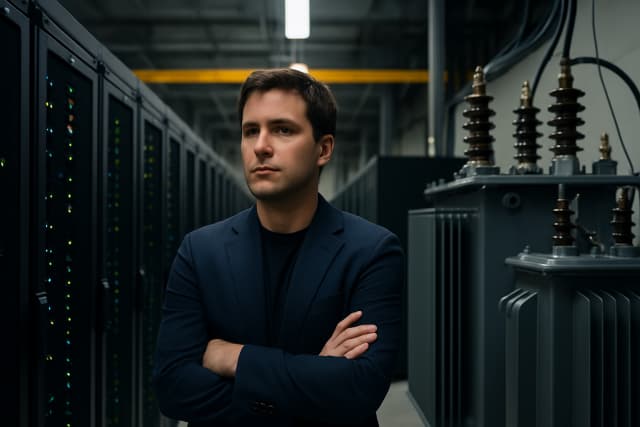






Tenstorrent, the AI-computing company led by chip-design veteran Jim Keller, has raised $1.5 billion in a Series E round, the single largest startup financing disclosed during the week of October 15–21, 2026. The round dwarfs every other deal announced in the period, including ASI's $325 million raise, Otter.ai's $320 million infusion, and Arda Industries' $232 million emergence from stealth. It also arrives as Tenstorrent's valuation has reportedly climbed to $6.2 billion, underscoring how aggressively investors are pricing in the company's bet on open, alternative compute architectures. The financing cements Tenstorrent's position as one of the most closely watched challengers to the entrenched players that currently dominate AI-chip supply.
***
The scale of Tenstorrent's raise reflects a broader pattern playing out across venture capital this autumn: money is flooding toward the physical and computational infrastructure underpinning the AI boom, not just the software and applications built on top of it. From chip design to robotics to quantum computing, the biggest checks this week went to companies solving hard, capital-intensive problems rather than shipping consumer apps. That shift carries real stakes for an industry increasingly worried about compute scarcity, supply-chain concentration, and the enormous cost of building AI at scale.
A Record Round for an Open-Compute Bet
Tenstorrent's $1.5 billion Series E is not just the largest round of the week — it is more than four times the size of the next-biggest disclosed financing, ASI's $325 million Series C. The company, founded and led by Jim Keller, a veteran chip architect known for his work at AMD, Apple, Tesla, and Intel, has built its reputation on designing AI-computing hardware and software that is explicitly positioned as an open alternative to the dominant, largely closed AI-accelerator ecosystems that currently control the market.
The new capital will go toward expanding Tenstorrent's open-compute ecosystem, a strategy that includes both its own chip architectures and the software tooling needed to make them usable at scale for AI developers. With the company's valuation reportedly reaching $6.2 billion, investors are signaling strong conviction that there is room — and demand — for a credible, open alternative in a chip market that has grown increasingly concentrated around a small number of suppliers.
Why Investors Are Betting on an Alternative
The AI industry's dependence on a narrow set of chip suppliers has become one of its most discussed vulnerabilities, as demand for training and inference compute continues to outstrip supply. Tenstorrent's pitch to investors rests on the idea that an open-compute model — one where architectures, tooling, and in some cases designs are more accessible to developers and hardware partners — can reduce that bottleneck while giving large AI developers more negotiating leverage and architectural flexibility.
That pitch has proven persuasive to a wide investor base willing to write large, patient checks for a company whose success depends on years of hardware development, manufacturing partnerships, and software maturation rather than quick iteration cycles typical of consumer software startups. The size of the round suggests backers are treating chip-architecture diversity as a strategic necessity for the broader AI ecosystem, not simply a niche technical preference.
Part of a Broader Infrastructure Gold Rush
Tenstorrent's round did not happen in isolation. The same week saw ASI raise $325 million at a $3 billion valuation to build AI systems for critical infrastructure and national security, while Reliable Robotics added $115 million to push its valuation above $1 billion developing autonomous aircraft technology. Arda Industries emerged from stealth with $232 million aimed at accelerating U.S. manufacturing, and Dream Labs raised $90 million to build robots trained on simple video feeds.
Taken together, these deals show capital concentrating in sectors that require substantial upfront investment in hardware, manufacturing, or physical infrastructure — areas that were historically harder to finance through traditional venture capital because of long development timelines and capital intensity. Investors appear increasingly willing to accept those tradeoffs when the underlying technology is viewed as strategically important to either national competitiveness or the broader AI buildout.
That willingness extends beyond chips and robotics. Quantum-computing startup Oratomic separately raised $475 million just months after a $300 million round in July, while cloud and power-infrastructure company Axiom Solutions International secured $2 billion to address the electricity and data-center capacity constraints increasingly viewed as the binding constraint on AI's growth.
The Competitive Stakes for AI Chips
For Tenstorrent, the $1.5 billion raise buys time and resources to compete in a market where incumbents enjoy enormous scale advantages, deep manufacturing relationships, and years of software ecosystem lock-in among AI developers. Converting that capital into real market share will require not just competitive hardware but also convincing major AI labs and enterprises to build on an architecture outside the mainstream stack they already know.
Still, the round signals that serious institutional money believes an opening exists. As AI compute demand continues to outpace supply and concerns mount about overreliance on a small number of chip suppliers, companies like Tenstorrent are being positioned by their backers as insurance policies against future bottlenecks — a bet that, if it pays off, could meaningfully reshape who controls the infrastructure powering the next generation of AI systems.
We're not trying to build a faster version of what already exists. We're trying to build the open alternative that the industry actually needs before it's too dependent on a handful of suppliers.
What Comes Next
Tenstorrent has not disclosed a detailed timeline for deploying the new capital, but the scale of the raise suggests the company plans to accelerate both chip production and the software ecosystem required to make its hardware attractive to developers already accustomed to competing platforms. Expanding manufacturing capacity and securing fabrication partnerships will likely be early priorities, given the lead times inherent in semiconductor production.
The broader venture landscape this week — spanning chips, robotics, quantum computing, and energy infrastructure — suggests investors are preparing for a multi-year buildout cycle rather than betting on near-term returns. Whether Tenstorrent can convert its outsized war chest into genuine market share against entrenched incumbents will be one of the more consequential tests of that thesis over the next several years.
Sources
- https://www.alleywatch.com/
- https://techcrunch.com/category/fundraising/
- https://techfundingnews.com/category/acquisition/
- https://techfundingnews.com/tag/acquisition/
- https://techfundingnews.com/category/funding/
- https://techfundingnews.com/tag/acquisitions/
- https://startup.bid/funding/
- https://www.calcalistech.com/tags/Funding
- https://www.businesswire.com/newsroom/subject/funding
- https://news.crunchbase.com/sections/startups/
- https://www.prnewswire.com/news-releases/financial-services-latest-news/venture-capital-list/
- https://techcrunch.com/category/startups/venture/
- https://ventureburn.com/
Leave a Comment