

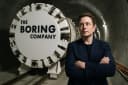




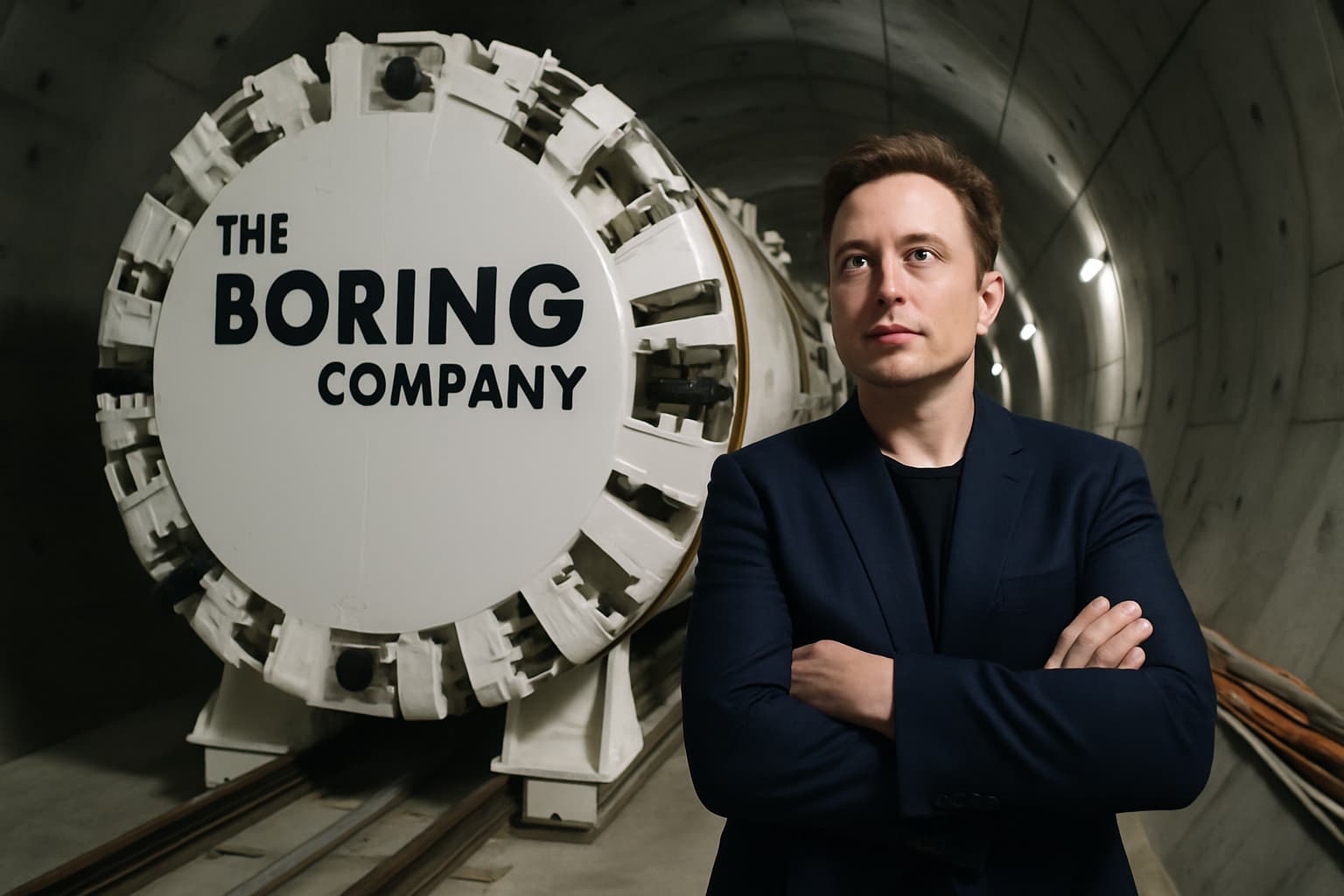



The Boring Company, Elon Musk's tunneling venture, has raised $3 billion in a Series D funding round led by the United Arab Emirates, pushing the company's valuation to $23 billion. The deal marks one of the largest infrastructure-related venture rounds of the year and signals growing Gulf-state appetite for stakes in Musk-affiliated ventures beyond Tesla and SpaceX. It also lands amid an extraordinary week of startup fundraising, with AI infrastructure players like Crusoe and Fluidstack each pulling in billions of their own. The scale of the round underscores how sovereign capital is increasingly flowing into unproven but ambitious physical-world technology bets.
The Boring Company has long occupied an unusual niche in Musk's business empire, promising to revolutionize urban transportation through networks of underground tunnels while facing persistent skepticism about its commercial viability outside a handful of projects, most notably the Las Vegas Convention Center Loop. This new capital injection, led by a foreign government rather than traditional venture firms, reflects a broader pattern this week in which sovereign wealth and strategic investors are competing aggressively for access to capital-intensive infrastructure and AI startups. The round arrives alongside a wave of other massive raises, including Crusoe's $3 billion AI data center financing and Motive's $1.3 billion growth round, suggesting investors are willing to write enormous checks for companies building the physical backbone of next-generation industries.
A Gulf-Backed Bet on Underground Infrastructure
The United Arab Emirates' decision to lead a $3 billion round in The Boring Company represents one of the most significant direct bets by a Gulf government on a Musk-led venture outside of Tesla's manufacturing ambitions. While the UAE and other Gulf states have poured money into AI infrastructure and semiconductor supply chains in recent years, this deal signals interest in physical infrastructure technology that could reshape congested cities, a priority for nations investing heavily in futuristic urban development projects like NEOM in neighboring Saudi Arabia.
The Boring Company was founded in 2016 out of Musk's frustration with Los Angeles traffic, and it has since built tunnel systems including the Vegas Loop, which ferries passengers around the Las Vegas Convention Center and Strip in Tesla vehicles. Despite years of ambitious pitches for tunnels connecting cities and airports, the company has faced criticism for slow project delivery and unproven unit economics at scale. A $23 billion valuation, up sharply from prior private valuations, suggests investors are betting on much broader deployment of tunneling technology in the coming years, potentially including projects tied to Gulf infrastructure ambitions.
Part of a Historic Week for Mega-Rounds
The Boring Company's raise did not happen in isolation. This week alone, Crusoe secured $3 billion for its AI data center and cloud business, Fluidstack raised $1.5 billion for AI infrastructure, and Motive pulled in more than $1.3 billion from General Catalyst's Customer Value Fund for its physical-operations AI platform. Positron AI raised $875 million at a $5 billion valuation, while Together AI closed an $800 million Series C for its open-source AI infrastructure layer.
The sheer concentration of billion-dollar-plus rounds in a single week illustrates how venture capital, sovereign wealth funds, and corporate investors are converging around a handful of capital-intensive sectors: AI compute, defense technology, and now physical infrastructure. Castelion's $800 million raise for hypersonic missile development, which included $250 million in debt financing, further reinforces that investors are chasing deep-tech plays requiring massive upfront capital rather than typical software startups. Analysts say this reflects a maturing venture landscape where the biggest checks increasingly go to companies solving hard physical and computational problems rather than purely digital ones.
Why Sovereign Capital Is Flowing Into Musk's Orbit
The UAE's leadership of this round fits a pattern of Gulf states seeking direct equity stakes in transformative technology companies rather than simply funding infrastructure at home. Sovereign wealth vehicles from the UAE, Saudi Arabia, and Qatar have increasingly targeted AI, robotics, and infrastructure startups as a hedge against oil dependency and a way to import cutting-edge technology and expertise. Musk's companies, given their high profile and Musk's personal relationships with Gulf leaders, have become an attractive entry point for this strategy.
Other AI-focused investors joined the frenzy this week as well. Hark, a startup that raised $700 million in Series A funding led by Parkway Venture Capital, drew participation from a remarkable roster including Nvidia, Intel Capital, AMD, Qualcomm Ventures, and ARK Investment Management, showing how chipmakers and traditional venture firms alike are racing to back infrastructure plays. That kind of broad strategic backing, spanning government funds, chipmakers, and financial investors, has become a defining feature of the current funding environment, where capital is chasing not just software innovation but the physical and computational infrastructure underpinning it.
Skepticism Remains Despite the Valuation Surge
Not everyone is convinced The Boring Company's $23 billion valuation is justified by its track record. The company has repeatedly missed timelines on ambitious projects, including a long-promised tunnel network beneath Los Angeles that never materialized, and critics note that the Vegas Loop, while operational, remains a relatively modest proof of concept compared to the citywide transit systems Musk has envisioned. Regulatory hurdles, labor costs, and the sheer physical difficulty of tunneling under dense urban environments have historically slowed the pace of expansion.
Still, investors appear willing to bet on long time horizons for infrastructure payoffs, much as they have with SpaceX and Tesla in earlier years. With fresh capital from a sovereign backer motivated by strategic as well as financial interests, The Boring Company may finally have the resources to pursue larger-scale projects, potentially including tunnel systems tied to future UAE development initiatives. Whether that translates into commercially viable, widely deployed tunnel networks remains the central question investors and skeptics alike will be watching in the years ahead.
Tunneling is one of the last great unsolved infrastructure problems, and the capital required to prove it out at scale is enormous. This round gives us the runway to move faster than anyone thought possible.
A Broader Signal for the Funding Landscape
Taken together with this week's other mega-deals, including World Labs' $1 billion raise for 3D-world AI models and Harvey's $550 million round valuing the legal AI startup at $15.5 billion, The Boring Company's raise reinforces a shift toward fewer, larger bets concentrated among startups tackling capital-intensive frontier technology. Smaller regional ecosystems, such as India's, continued to see steady activity as well, with Pixxel raising $100 million and Indian startups collectively pulling in more than $400 million across two dozen rounds during the same period, but the scale gap between these deals and the billion-dollar infrastructure and AI rounds has never been more pronounced.
For founders and investors alike, the message from this week's funding activity is clear: the venture capital market is bifurcating, with enormous sums flowing to a small set of companies building AI compute, defense systems, and physical infrastructure, while more traditional startups compete for comparatively modest checks. The Boring Company's $3 billion round, backed by a sovereign government rather than a conventional venture fund, may prove to be an early indicator of how future infrastructure financing gets structured, with nation-states playing an increasingly direct role in bankrolling the technologies they hope will define the next several decades.
Sources
- https://news.crunchbase.com/venture/biggest-funding-rounds-boring-co-cognition-massive-week/
- https://genztech.blog/funding-tracker/
- https://news.crunchbase.com/venture/biggest-funding-rounds-crusoe-fluidstack-multibillion-dollar-ai-infrastructure/
- https://www.moneycontrol.com/news/business/funding/
- https://vcnewsdaily.com/
- https://www.alleywatch.com/
- https://www.analyticsinsight.net/news/weekly-startup-funding-roundup-ai-robotics-deep-tech-draw-fresh-capital
- https://www.analyticsinsight.net/ipo/weekly-startup-funding-roundup-ai-legal-tech-mobility-lead-this-weeks-deals
- https://www.alleywatch.com/2026/09/the-weekly-notable-startup-funding-report-9-8-26/
- https://www.cnbctv18.com/business/startup/india-startups-this-week-funding-slips-3-to-258-6-million-in-a-week-19990055.htm
Leave a Comment