





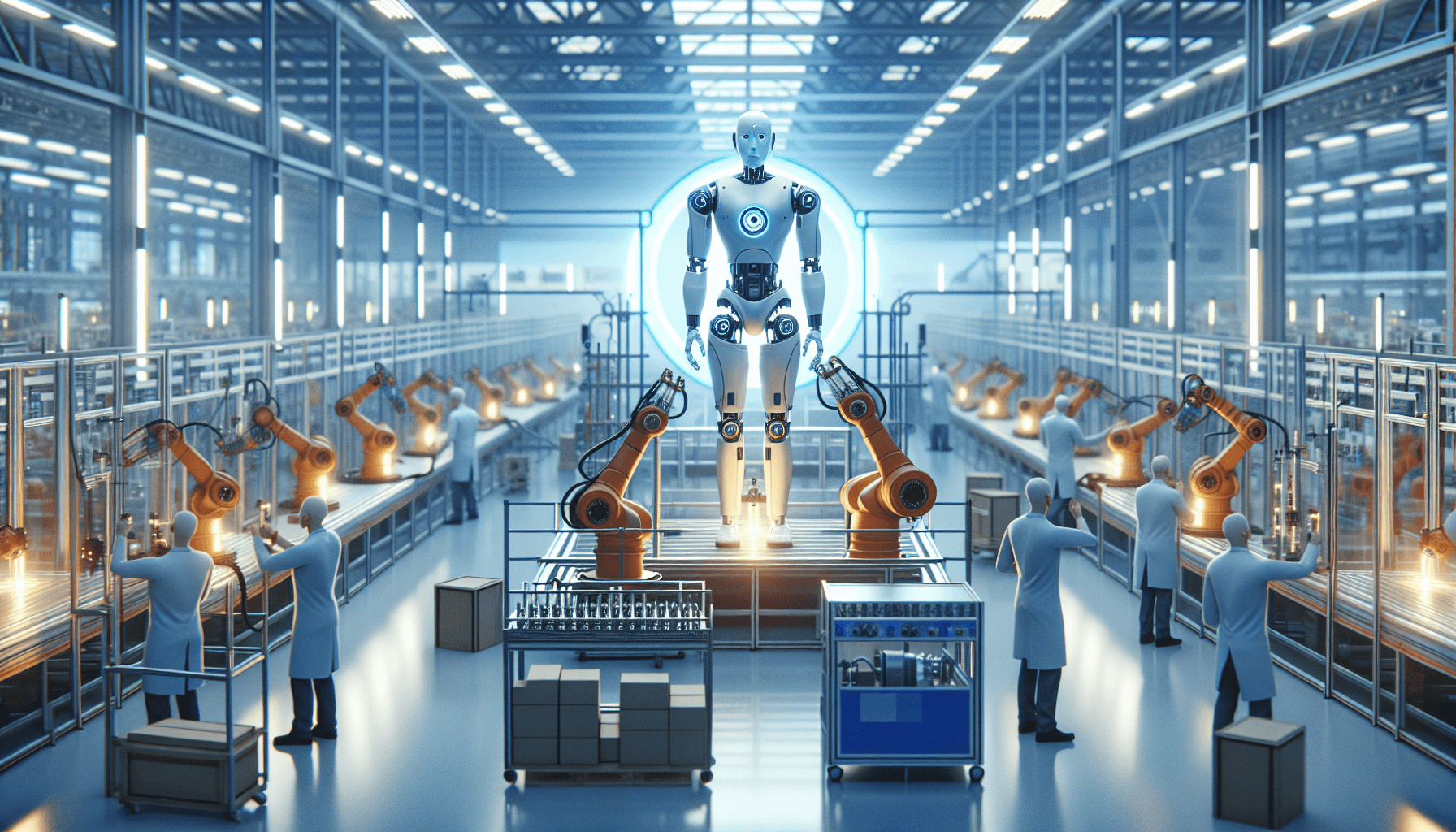



German automation leader PIA Automation announced on April 15, 2026, the launch of a new embodied AI and humanoid robotics division through a strategic partnership with Chinese robotics company AgiBot. The collaboration, conducted through their joint venture Joybot Manufacture, will cover the complete value chain from research and development to large-scale production. The partnership aims to establish European manufacturing capacity for humanoid robots as the industry transitions from laboratory concepts to real-world industrial deployment.
This partnership represents a significant milestone in the globalization of humanoid robotics manufacturing, coming at a time when industry analysts project 100 million cumulative humanoid robot sales by 2036. With manufacturing facing a critical labor shortage—433,000 open positions as of December 2025 and a projected 1.9 million unfilled roles through 2033—the timing could not be more crucial for scaled humanoid robot production capacity.
Strategic Alliance Bridges European and Chinese Robotics Markets
The PIA Automation-AgiBot partnership through Joybot Manufacture represents more than just a business deal—it's a strategic bridge between European manufacturing expertise and Chinese robotics innovation. PIA Automation brings decades of industrial automation experience to the table, while AgiBot contributes cutting-edge AI-powered humanoid technology that has already been deployed at scale in Chinese factories. This combination positions the joint venture to serve the rapidly growing European demand for humanoid robotics solutions.
The partnership's focus on establishing European manufacturing capacity addresses a critical gap in the global supply chain for humanoid robots. Currently, most production is concentrated in Asia, particularly China, where companies like AgiBot have been leading deployment across automotive, semiconductor, and electronics manufacturing sectors. By localizing production in Europe, the joint venture can better serve European customers while reducing supply chain dependencies and compliance complexities.
Market Timing Aligns with Labor Crisis and Technical Maturity
The announcement comes as the manufacturing sector faces an unprecedented labor shortage, with 433,000 open positions recorded in December 2025 and a concerning 1.4% monthly quit rate representing 184,000 departing workers. Deloitte's projections of 1.9 million unfilled manufacturing positions through 2033 underscore the urgency for automated solutions that can operate in existing human-designed facilities without costly infrastructure modifications.
Industry experts at the World Economic Forum's 2026 meeting in Davos reached consensus that core technical breakthroughs in physical AI are largely complete, marking 2026 as a pivotal transition year from research to deployment. The timing of the PIA-AgiBot partnership capitalizes on this technical maturity, with humanoid robots now capable of learning new tasks through natural language instruction rather than extensive reprogramming—a crucial advancement for industrial flexibility.
AgiBot's Proven Real-World Deployment Experience
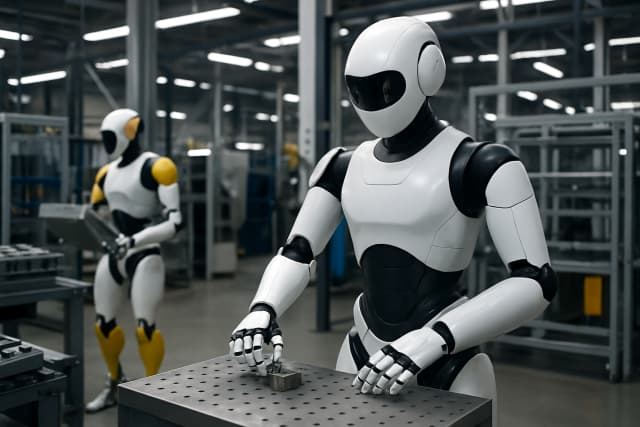
AgiBot brings significant real-world deployment credentials to the partnership, having successfully implemented AI-powered humanoid robots across multiple industrial sectors in China. The company's robots are trained on actual factory data and can handle complex tasks including assembly operations, quality control inspections, and sophisticated object handling—capabilities that have been validated in operational manufacturing environments rather than just laboratory settings.
The company's deployment of Real-World Reinforcement Learning systems represents a technical breakthrough that allows robots to continuously improve their performance based on actual working conditions. This approach has proven particularly valuable in electronics manufacturing, where AgiBot's systems have demonstrated the ability to perform real-time quality inspections and adapt to variations in production requirements without human intervention.
European Production Strategy and Competitive Positioning
The joint venture's plan to establish European manufacturing capacity positions it strategically against established players like Tesla's Optimus Gen 2, Boston Dynamics' Atlas, and Agility Robotics' Digit. While these companies have demonstrated successful deployments in their respective markets—Tesla in its own factories, Boston Dynamics with Hyundai for heavy lifting tasks, and Agility in warehouse logistics—the PIA-AgiBot partnership offers a unique value proposition of localized European production combined with proven Chinese deployment experience.
The European focus also allows the partnership to capitalize on the region's strong manufacturing base and regulatory environment. European manufacturers have historically been early adopters of industrial automation, making them ideal customers for advanced humanoid robotics solutions. The local production capability will enable faster deployment times, reduced shipping costs, and better compliance with European safety and technical standards.
Core technical breakthroughs in physical AI are largely complete. Autonomous robots have transitioned from labs to operating at scale in ports, warehouses, and factories across manufacturing, healthcare, and logistics sectors.
Industry Transformation and Future Outlook
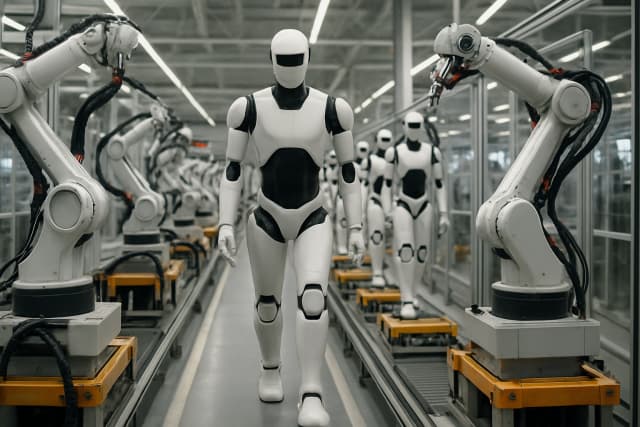
The partnership announcement reflects broader industry trends showing humanoid robots transitioning from experimental technology to practical manufacturing solutions. Current deployments focus on heavy lifting tasks, multi-task flexibility, quality control, and 24/7 operational continuity—applications where humanoid robots provide clear advantages over traditional fixed-function automation systems. The ability to work in existing human-designed spaces without facility modifications represents a significant competitive advantage.
Industry analysts are calling 2026 a pivotal year for humanoid robots in industrial settings, with the combination of AI advancement, improved affordability, and proven reliability driving widespread adoption. The PIA-AgiBot partnership positions both companies to capitalize on projected market growth, with humanoid robots expected to reach a critical tipping point by 2030 that could transform work, life, and economic operations across multiple sectors.
Sources
- https://www.youtube.com/watch?v=lf9BdOJ-VcY
- https://www.weforum.org/stories/2026/03/advances-in-autonomous-robotics-what-comes-next/
- https://www.globalxetfs.com/articles/robotics-breakthroughs-in-automation/
- https://novushitech.com/robotics-advancements-and-automation-2025/
- https://www.therobotreport.com
- https://roboticsandautomationnews.com
- https://news.mit.edu/topic/robotics
- https://setr.stanford.edu/technology/robotics/2023
- https://www.slsbearings.com/sg-en/blog/humanoid-robots-in-manufacturing-the-future-of-factory-automation
- https://www.youtube.com/watch?v=4l1wfW4_ETM
- https://sedonatec.com/feeds/blog/robots-factory
- https://amdmachines.com/blog/the-future-of-humanoid-robots-in-manufacturing/
Leave a Comment