






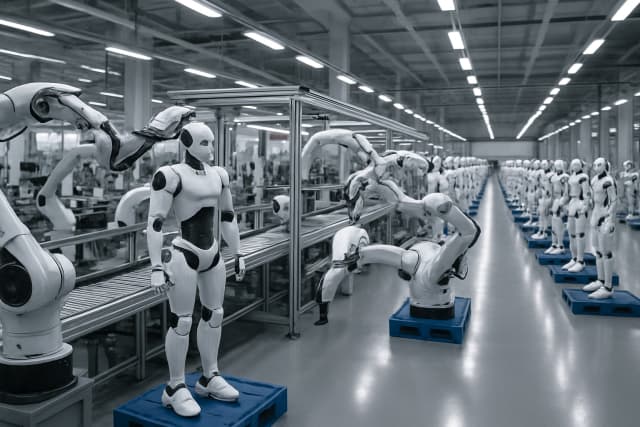



Hyundai confirmed plans to deploy Boston Dynamics' Atlas humanoid robots at its U.S. manufacturing plant in Georgia starting in 2028, beginning with parts sequencing before expanding to full component assembly by 2030. The automaker also said it aims to build capacity for 30,000 robot units annually by 2028, one of the most concrete industrial commitments yet for humanoid robotics at scale. The announcement lands alongside a wave of similar moves, including a landmark deal in which Humanoid says it will supply thousands of robots to German manufacturing giant Schaeffler. Together, these commitments mark a shift from flashy demos and pilot showcases toward humanoid robots being written into actual factory floor plans.
For years, humanoid robots have been a staple of splashy conference demos and viral videos, rarely translating into sustained industrial deployment. That is starting to change in 2026, as major manufacturers put dates, unit counts, and specific job tasks behind their humanoid ambitions rather than vague promises of future automation. The Hyundai-Atlas timeline, paired with Schaeffler's bulk order and new manufacturing-first platforms from companies like Ati Motors and DOBOT, suggests the industry is quietly building toward a real inflection point, even as researchers at McKinsey and elsewhere caution that dexterity, safety, and cost barriers remain far from solved.
A Concrete Timeline for Atlas in Georgia
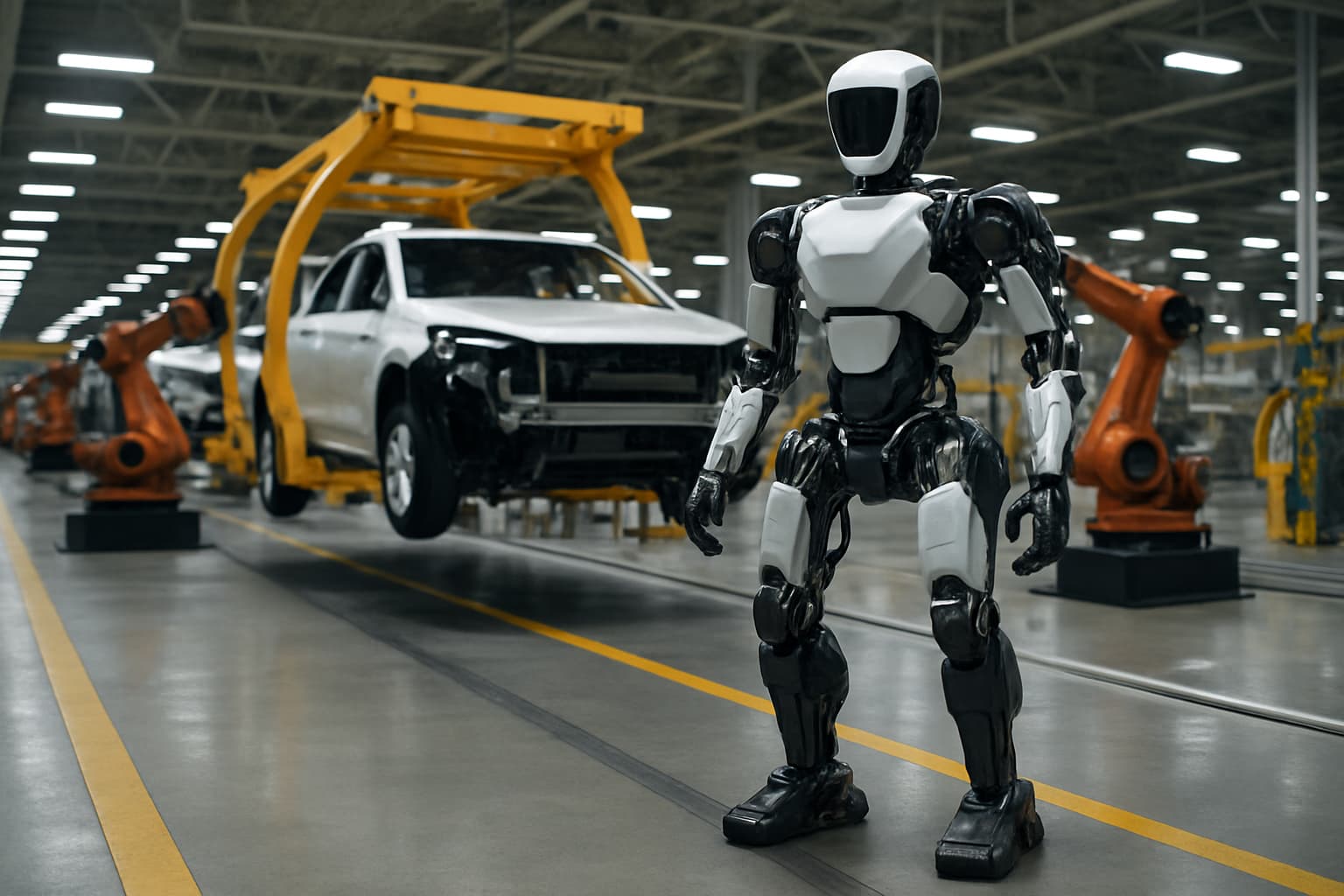
Hyundai's January 2026 announcement stands out for its specificity in an industry often criticized for overpromising and underdelivering. The company said Atlas robots, developed by its subsidiary Boston Dynamics, will begin work at its U.S. manufacturing plant in Georgia in 2028, focused initially on parts sequencing, a task that involves organizing and staging components for assembly lines. That is a deliberately narrow starting point, reflecting the current reality that humanoid robots are not yet ready to match human workers on complex, high-speed assembly tasks.
The roadmap calls for expansion into full component assembly by 2030, a two-year runway that gives Hyundai time to validate safety, reliability, and throughput before trusting robots with more delicate or safety-critical work. Perhaps more telling is Hyundai's stated goal of building capacity for 30,000 robot units annually by 2028, a figure that signals the company is planning for mass production of humanoids rather than a one-off pilot. That kind of manufacturing capacity commitment is rare in the sector and suggests Hyundai views Atlas not as an experiment but as a long-term capital investment in its production strategy.
Schaeffler and the Shift to Bulk Orders
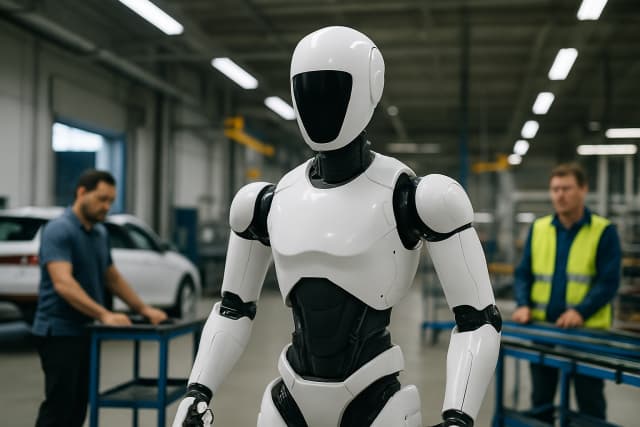
Hyundai is not alone in making large-scale commitments. Humanoid, a robotics company focused on industrial deployment, says it has secured a landmark agreement with German engineering firm Schaeffler to deploy thousands of humanoid robots across its operations. The scale of the deal, thousands of units rather than a handful of demonstration robots, marks one of the clearest signals yet that established industrial manufacturers are ready to bet real money on humanoid labor.
Schaeffler, which produces bearings and components for the automotive and industrial sectors, represents exactly the kind of customer humanoid robotics companies have been chasing: a manufacturer with repetitive, physically demanding tasks spread across many facilities worldwide. Deals like this move the industry conversation away from whether humanoids can work at all and toward how quickly they can be integrated into existing supply chains without disrupting output. It also puts pressure on competitors to demonstrate similar enterprise traction rather than relying on venture funding and demo reels alone.
Purpose-Built Machines for Real Factory Work
Not every company chasing the manufacturing humanoid opportunity is building a robot that looks or moves exactly like a person. Ati Motors recently launched Sherpa Mecha, which the company describes as a manufacturing humanoid built for practical industrial work such as tending machines and transporting heavy bins and parts, rather than mimicking human form for its own sake. That philosophy reflects a broader engineering debate in the field: whether humanoid shape is actually the optimal design for factory tasks, or whether it simply makes robots easier to market and deploy in spaces built for human workers.
DOBOT is taking a similar pragmatic approach with its ATOM Max and ATOM-W wheeled humanoid platforms, both aimed squarely at industrial-grade manipulation and mobile tasks rather than general-purpose consumer applications. The emphasis across these newer platforms is manufacturing utility first, humanoid aesthetics second. Industry coverage throughout 2026 has noted that humanoid robots are already doing real, paid work in a handful of facilities, but that work remains concentrated in material handling, bin picking, tote handling, and simple assembly, not the high-speed automotive line production that captures headlines.
The Barriers That Still Stand in the Way
Despite the momentum, McKinsey's analysis of the sector identifies four persistent barriers to large-scale humanoid deployment: safety for fenceless operation, meaning robots working alongside humans without protective cages; sustained uptime across long shifts; greater dexterity and mobility to handle varied tasks; and radical cost reduction to make fleets economically viable. Each of these remains a significant engineering and economic challenge, and none of them can be solved through marketing alone. Robots that work brilliantly in a controlled demo can still struggle with the unpredictability of a real factory floor, where lighting changes, parts arrive out of order, and human coworkers move unpredictably.
Cost is arguably the most immediate obstacle. Even with Hyundai's ambitious 30,000-unit annual capacity target, humanoid robots remain expensive relative to fixed automation or human labor in many regions, and the economics only work at genuine scale. This is part of why deals like Schaeffler's bulk order and Hyundai's phased 2028-to-2030 rollout matter so much: they represent real-world stress tests that will determine whether humanoid robotics can move from promising pilots to indispensable infrastructure, or whether the current wave of enthusiasm cools once the harder engineering problems come due.
The barriers to large-scale deployment aren't about ambition anymore, they're about safety for fenceless operation, sustained uptime, greater dexterity and mobility, and radical cost reduction. Solve those four things and adoption accelerates fast.
What Comes Next for Industrial Humanoids
The next two years will be decisive for the sector. Hyundai's 2028 start date gives Boston Dynamics and its parent company a firm deadline to prove Atlas can handle parts sequencing reliably at commercial scale, while Schaeffler's deployment will test whether Humanoid's robots can function across thousands of units without the kind of maintenance headaches that have plagued earlier automation waves. If these deployments succeed even partially, expect other automakers and industrial manufacturers to follow with their own multi-year humanoid roadmaps rather than isolated pilot announcements.
The broader robotics ecosystem is also maturing to support this shift, with companies like NVIDIA building simulation and training infrastructure specifically aimed at accelerating manipulation skills for humanoid platforms. Whether that infrastructure closes the gap identified by McKinsey fast enough to meet Hyundai's 2028 timeline remains an open question, but the direction of travel is now unmistakable. Humanoid robots are no longer a speculative bet on a distant future; they are becoming a line item in real manufacturing capital expenditure plans, with dates, unit targets, and named customers attached.
Sources
- https://www.therobotreport.com/
- https://www.roboticstomorrow.com/stream/news/
- https://roboticsandautomationnews.com/
- https://www.therobotreport.com/category/robots-platforms/industrial-robots/
- https://www.therobotreport.com/top-10-robotics-stories-of-may-2026/
- https://www.therobotreport.com/category/news/
- https://techcrunch.com/category/robotics/
- https://www.therobotreport.com/robotics-news/
- https://www.roboticsintl.com/
- https://www.businesswire.com/newsroom/industry/technology/robotics
- https://techxplore.com/robotics-news/
- https://news.mit.edu/topic/robotics
- https://www.roboticstomorrow.com/
Leave a Comment